
Butter-poached trout and moqueca sauce
- medium
- 4
- 2 hours 15 minutes
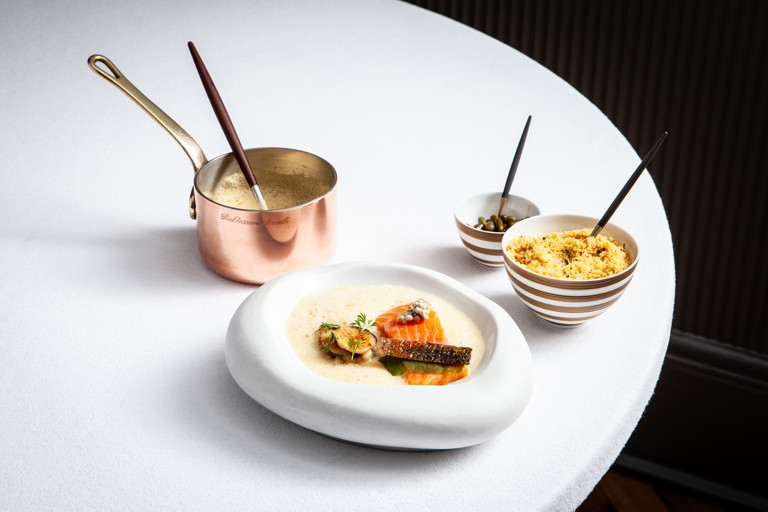
Rafael Cagali’s storytelling for this dish begins and ends with moqueca, the traditional Brazilian seafood stew made from a base of onions, peppers, garlic and shrimp paste and sauce of coconut milk and tomatoes. Rafael serves this deconstructed – making an aerated moqueca sauce from langoustine heads and a fragrant chervil, coriander and lemon infusion – serving it with dry-aged trout that is poached gently in butter, a farofa made with sweetcorn flour instead of cassava flour, manteiguinha beans and pickled cumaris (very hot and small chillies from the habanero family).
Note: At Da Terra, Rafael ages trout in a dry-ageing fridge for nine days to improve its texture, but if you don’t have the capacity to do this, you can quick-cure the fish instead. To do this, combine 15g salt and 15g caster sugar. Cover the trout in the cure, pressing it onto the fish, then set aside on a tray in the fridge to cure for 1 hour. Wipe off the cure then rinse the fish under cold running water. Pat dry with kitchen paper and proceed as per the recipe.
Note: Manteiguinha beans – a rare, heirloom variety of cowpea – are hard to find in the UK, so you can use feijão manteiga (Portuguese large butter beans) as an alternative; these can be found in Brazilian and Portuguese shops online. Or you can use dried butter beans. Adjust the cooking time accordingly – both of these will take a lot longer to cook.
Ingredients
Metric
Imperial
TROUT
- 200g of trout, skin removed and reserved (see note)
- unsalted butter, for poaching
OKRA TUILE
- 100g of okra, trimmed
SPICE PASTE
- 6g of black peppercorns
- 6g of ground turmeric
- 60g of fresh ginger
- 6g of coriander seeds
- 4 red chillies
- 20g of dried shrimp
- red palm oil, for blending
MOQUECA SAUCE
- 50g of unsalted butter, plus extra to finish
- 20g of garlic, finely sliced
- 500g of onion, finely chopped
- 500g of red pepper, finely sliced
- 300g of green pepper, finely sliced
- 500g of tomatoes, chopped
- 80g of red palm oil
- 4 langoustine heads, (optional)
- 100g of okra, chopped
- 3l fish stock
- 500g of coconut milk
- 400g of cod, chopped into chunks
- 30g of coriander
- 20g of chervil, or flat-leaf parsley
- 1 lemon, sliced
MANTEIGUINHA BEANS
- 200g of manteiguinha beans, dried (see note)
- 600ml of fish stock
FAROFA
- 1 onion, finely chopped
- 4 garlic cloves, finely grated
- 200g of sweetcorn flour
- unsalted butter, for toasting
TO SERVE
- Okra seeds, boiled until tender
- 1 plantain, finely sliced on a mandolin, cut into 2cm discs and blowtorched until golden brown
- Mountain coriander cress
- cumari chillies, lightly pickled (you can use scotch bonnet as an alternative)
Equipment
- Non-stick baking mat
- Dehydrator
- Temperature probe
- Stick blender
- Blowtorch
- Mandoline
Method
Dry age the trout 9 days before you want to serve the dish (see note), or quick-cure it on the day or the day before
- 200g of trout, skin removed and reserved (see note)
For the okra tuile, bring a pan of salted water to the boil then blanch the okra for 30-60 seconds
- 100g of okra, trimmed
Plunge the okra into iced water then, once cool, remove and transfer to a blender. Blend until completely smooth, adding small splashes of the blanching water if needed. Strain the purée through a fine mesh sieve and season lightly with salt
Spread the purée in an even layer on a non-stick baking mat no more than 1mm thick. Dehydrate in a dehydrator at around 60-65°C for 1-2 hours, checking regularly (or you can dehydrate in a low oven preheated to 80-100°C for 1½ hours, checking after 45 minutes). A few minutes before the tuiles are fully dehydrated, cut them into 85mm x 20mm rectangles, then return them briefly to the dehydrator to finish drying. Set aside in an airtight container until needed
For the spice paste, place all the ingredients except the red palm oil into a food processor. Blitz into a paste and, with the motor still running, add a little red palm oil to help it blend. Weigh out 40g and set aside (this will make more than you need)
- 6g of black peppercorns
- 6g of ground turmeric
- 60g of fresh ginger
- 6g of coriander seeds
- 4 red chillies
- 20g of dried shrimp
- red palm oil, for blending
For the moqueca sauce, place a large saucepan on a medium heat. Melt the butter then sweat the garlic, onions and peppers with a pinch of salt until soft and translucent
- 50g of unsalted butter, plus extra to finish
- 20g of garlic, finely sliced
- 500g of onion, finely chopped
- 500g of red pepper, finely sliced
- 300g of green pepper, finely sliced
Add the tomatoes and cook briefly, then add the red palm oil, the 40g of spice paste and the langoustine heads (if you have them). Stir to combine and fry until lightly caramelised. Add the okra and fish stock and cover and simmer for 30 minutes with the lid on
- 500g of tomatoes, chopped
- 80g of red palm oil
- 4 langoustine heads, (optional)
- 100g of okra, chopped
- 3l fish stock
Add the coconut milk and simmer uncovered for further 10 minutes
- 500g of coconut milk
Add the cod and let everything cook for another 5 minutes before turning off the heat and adding the herbs and lemon slices. Let it infuse for 5 minutes then strain the sauce through a fine mesh sieve into a container (discarding the solids). If not using straight away, cool, then store in the fridge until needed
For the manteiguinha beans, soak the beans in water for 10 minutes, then drain and place in a saucepan with the fish stock. Cook for further 10 minutes until the beans are al dente, then season with salt and set aside. If not using straight away, cool, then store in the fridge until needed
- 200g of manteiguinha beans, dried (see note)
- 600ml of fish stock
Portion the trout into 50g pieces. Very gently poach in melted butter for approximately 18 minutes or until the trout reaches an internal temperature of 45°C and is cooked mi-cuit (half-cooked)
- unsalted butter, for poaching
Meanwhile, to crisp up the trout skin, preheat the oven to 180°C. Place the skin between 2 sheets of baking paper on a baking tray and place in the oven until crisp. Cut into 85mm x 20mm rectangles and allow to cool. Set aside
For the farofa, in a frying pan over a medium heat, fry the garlic and onion in the butter until soft and translucent. Add the sweetcorn flour and toast, tossing regularly until golden. Set aside
- 1 onion, finely chopped
- 4 garlic cloves, finely grated
- unsalted butter, for toasting
- 200g of sweetcorn flour
To serve, gently reheat the moqueca sauce in a saucepan, add a knob of butter and use a handheld blender to emulsify and aerate the sauce. Transfer into a small jug or pan
Reheat the manteiguinha beans and farofa
Serve the trout with the okra tuile, crispy skin, the manteiguinha beans and the farofa. Garnish with some boiled okra seeds, blow-torched plantain discs and mountain coriander cress, then spoon over the sauce and serve with some lightly pickled cumari chillies on the side
- Okra seeds, boiled until tender
- 1 plantain, finely sliced on a mandolin, cut into 2cm discs and blowtorched until golden brown
- Mountain coriander cress
- cumari chillies, lightly pickled (you can use scotch bonnet as an alternative)
Get in touch
Please sign in or register to send a comment to Great British Chefs.