
Vegetable plate, nasturtium emulsion and herb vinegar
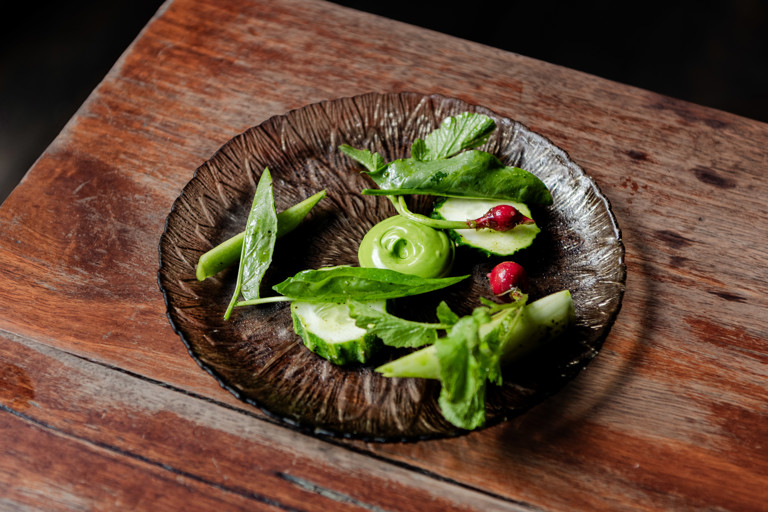
The vitality of Bart Stratfold’s elegant vegetable plate comes from the selection of vegetables and herbs. Bart uses fresh, crunchy vegetables and bold-flavoured leaves, dresses them in nasturtium oil and herb-infused vinegar. The herbs Bart uses depends on what they have available at his restaurant Timberyard in Edinburgh. The dish is simply prepared and served with a herbaceous nasturtium emulsion and a spritz of the herb vinegar just before eating.
Bart says: "If you are blessed with a garden and you grow your own herbs, you can be more selective about what goes into your herb vinegar. When thinning your herb patch for this, select the thick obnoxious stalks. The key to this dish is to dress the vegetables at the last minute – it’s all about freshness and vitality."
Ingredients
Metric
Imperial
- 800g of mixed vegetables, use a beautiful selection (Bart leans toward crunchy vegetables like radish, cucumber, fennel or carrot, and bold-flavoured leaves such as mustards or common sorrel)
HERB VINEGAR
- 100g of mixed herbs, of your choice (Bart uses the leftover nasturtium stalks from the emulsion making and recommends using as many herbs as you have to hand. He also uses red wave mustard, radish leaves and young fennel), washed, dried and cut into 2.5cm pieces
- 500ml of white wine vinegar, or other light-coloured (non-aged) vinegar like cider
NASTURTIUM EMULSION
- 200g of nasturtium leaves, stalks reserved
- 300g of grapeseed oil
- 15g of egg yolk
Equipment
- Preserving jar
- Squeezy bottles
- Spray bottle
Method
For the herb vinegar, first sterilise a clip-top preserving bottle or jar
Place any leftover nasturtium stalks and the mixed herbs in the bottle and cover them in the vinegar. Seal the jar and keep it in a cool, dark place for at least 1 week, but ideally 2-3 weeks
- 100g of mixed herbs, of your choice (Bart uses the leftover nasturtium stalks from the emulsion making and recommends using as many herbs as you have to hand. He also uses red wave mustard, radish leaves and young fennel), washed, dried and cut into 2.5cm pieces
- 500ml of white wine vinegar, or other light-coloured (non-aged) vinegar like cider
Once infused, strain it into a sterilised, airtight container or bottle, reserving some in a clean, atomiser spray bottle
For the nasturtium emulsion, first make a nasturtium oil. Pack the nasturtium leaves and the grapeseed oil into a high-powered blender. Blend on high for 10-12 minutes, or until it is hot to touch and looks split
- 200g of nasturtium leaves, stalks reserved
- 300g of grapeseed oil
Strain the mixture through a fine mesh sieve or muslin cloth and then leave to cool
To make the emulsion, weigh out 250g of the nasturtium oil into a jug. Place the egg yolks into a food processor or blender and, with the motor running, pour in the oil in a slow, steady stream to emulsify. Season with salt but no vinegar. Place in a squeezy bottle and keep in the fridge until needed
- 15g of egg yolk
Next, prepare the vegetables. Clean any dirt and trim off any discoloured bits with a paring knife. Wash them well in ice-cold water and then dry
- 800g of mixed vegetables, use a beautiful selection (Bart leans toward crunchy vegetables like radish, cucumber, fennel or carrot, and bold-flavoured leaves such as mustards or common sorrel)
Once ready to serve, cut the vegetables into bite-size pieces. Dress the vegetables in a little nasturtium oil, a little herb vinegar and a good pinch of freshly ground black pepper
To serve, pipe the emulsion in the middle of the plate. Build the vegetables and leaves around the emulsion and finish with a few good spritzes of vinegar from the atomiser spray bottle
Get in touch
Please sign in or register to send a comment to Great British Chefs.