
Bart Stratfold
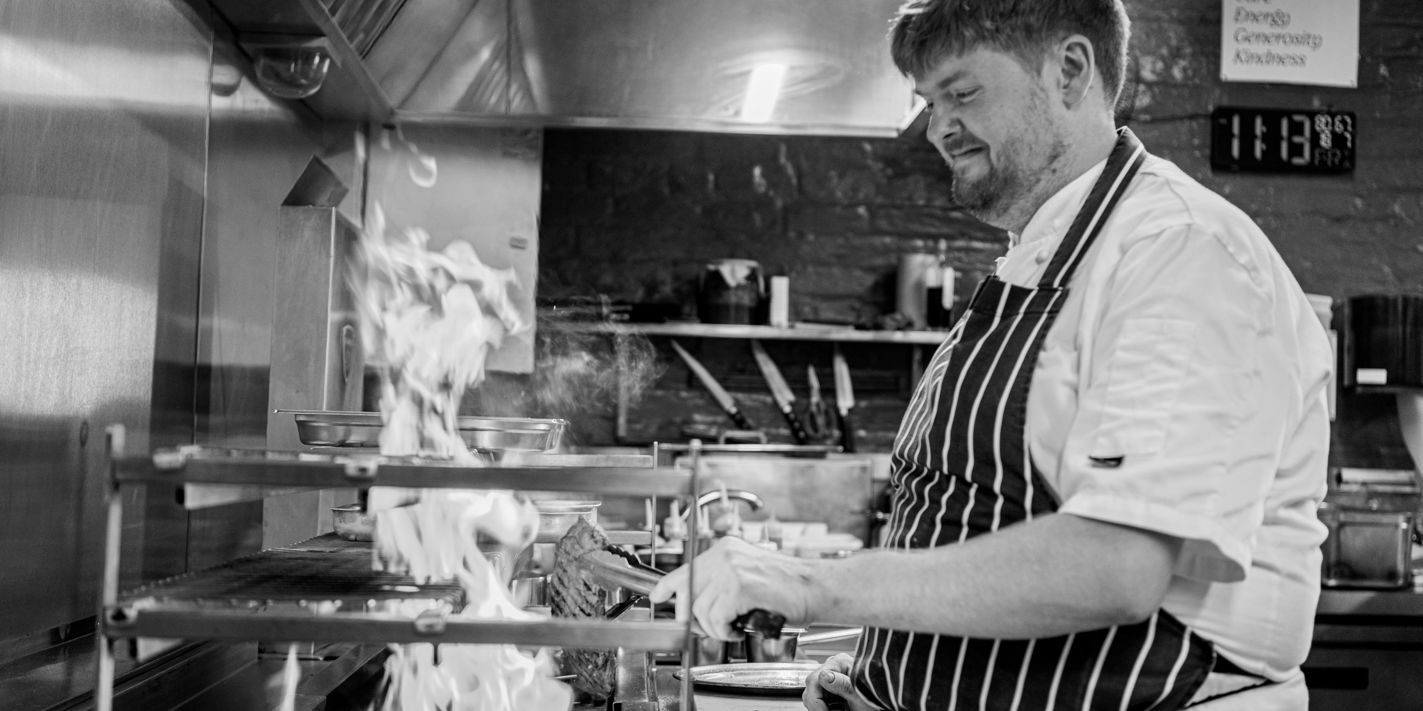
Bart Stratfold
First there was ‘modern British’ – cooking local ingredients with global inspiration. Then there was ‘new Nordic’ – the Scandinavian movement of using nothing but local and seasonal ingredients in the kitchen. Today, Scotland is in the midst of its own culinary golden age, celebrating the local larder in a thoughtful, contemporary way, but with subtle influences that go beyond the country’s borders. And Bart Stratfold is one of the chefs leading the charge.
Growing up in Malton, North Yorkshire, Bart always loved food and his parents both cooked professionally. But despite his interest and talent in all things culinary, he was strongly advised against going to catering college at school. Instead, he followed a more academic route, enjoyed a few party-fuelled ski seasons – and then found himself in London aged 21 with no real plan. So naturally, he reverted to what he was most passionate about: cooking. ‘I was delivering CVs all over the shop, but I didn’t really have a CV to speak of,’ he says. ‘Luckily a chef called Richard Robinson, who ran a place called Tom’s Kitchen at Somerset House, saw an eagerness in me and took me on.’
A baptism of fire
Untrained and running purely on enthusiasm, it took just four or five days before Bart was thrown into the deepest of deep ends. When the restaurant’s fish chef quit, Bart was given the section to manage. ‘I was shooting from the hip and working blind every day, watching Youtube videos in my spare time to try and teach myself the skills and techniques I was already supposed to know,’ he says. ‘To be honest it helped me immensely – I still tell all my junior chefs to watch videos of chefs at work to see how they act or how they become really skilled in one thing. Even through a screen, you’ll learn.’
After eighteen months of intense – yet very enjoyable – on-the-job training, Bart moved on to Bistro Union in Clapham, where he learned the importance of restraint. Stints at Hereford Road and Shepherd’s of Westminster followed, but as he approached 30, he’d grown tired of the frantic buzz of London and yearned for something more rural.
Cornwall, craft and Coombeshead Farm
At this point, Coombeshead Farm down in Cornwall and its pioneering chef-founder Tom Adams were gaining a lot of attention. Bart pestered the team there for months until he was finally given a month-long stage to work there. ‘You had to have your own accommodation to do a stage at Coombeshead, and I said I was staying in a caravan,’ he says. ‘I was in fact camping in a tent three miles away! I absolutely loved it, and got very lucky when one of the chefs there broke their ankle while out on a run. My eagerness and enthusiasm meant I was offered a permanent job there to cover. Very fortunate for me; less so for the other chef!’
If Bart’s time in London was a period of learning and discovery, the next three years at Coombeshead Farm were like a finishing school. ‘A lot of chefs talk about technique; I like to talk about craft,’ he says. ‘Tom Adams is a true craftsman, especially when it comes to butchery. It’s where I got to grips with whole animals and the ethos of only using ingredients that came from the farm. We’d only serve fish if we caught it ourselves. We were always chasing refinement and finessing everything we could. They were formative years, but you can only do so much in that sort of environment before you get tired and want to do your own thing.’
After a tricky period during the COVID lockdowns, Bart left Coombeshead to take on a small restaurant called Temple on Cornwall’s north coast, working closely with local fishmongers, butchers and smallholders. This was where he started to explore what his own cooking style could be. But after a year, with his partner unable to relocate to Cornwall and Bart not wanting to go back to London, they settled on a place where they could both find work: Edinburgh.
To the Timberyard
Bart arrived in Scotland’s capital knowing no one and with no job lined up. Thankfully, an old colleague at Coombeshead put him in touch with the team at Timberyard, a family-owned restaurant in the city’s Old Town. He joined as a cook, but was promoted to sous chef within weeks and soon became head chef, working under the exec chef James Murray. ‘I struck a chord with the Radford family, who own the place, and a lot of what I was doing at Coombeshead fit in well with what they wanted Timberyard to be. We started getting in whole animals, despite the challenges that comes with, and leaned into the local, seasonal, low-intervention style of cooking.’
Timberyard won a Michelin star in 2023 and, after exec chef James Murray’s departure in 2025, Bart and his team retained it – no mean feat. He’s now in charge of the Radford family’s other sites (wine bar Montrose and all-day dining spot Haze) too, but continues to push for change at the flagship. The kitchen is moving away from farmed meat altogether where it can, focusing instead on the deer, game birds, hares and rabbits the Scottish countryside bountifully provides. ‘An exception to that rule is that we get one fat pig in a month, mostly for charcuterie,’ says Bart. ‘But we have so much game up here that it seems obvious to make the most of it.’
Those exceptions to the rules are what makes Timberyard such an exciting place. Bart has a particular love of spice, thanks to trips to Southeast Asia, and uses a lot of black pepper in his cooking, along with a handful of other spices. 'Pepper doesn't grow here, of course, but it's been used in Scottish cooking for hundreds of years,' he says. 'Just look at haggis – probably the most Scottish thing you can eat. It's full of pepper.'
There’s a fluidity – some might say organised chaos – to this sort of hyper-seasonal, hyper-local cooking, which can fill some chefs with anxiety. For Bart, it clearly fills him and his team with inspiration. When something is good and available, it gets celebrated; when the season finishes, it’s time to move onto something else. Dishes can change within 24 hours depending on supply chains, and breaking down whole animals means there’s always a juggling act of how to use the various cuts. Bart’s focus for the future is now on longevity and lasting appeal over anything else. ‘Too many restaurants burn out,’ says Bart. ‘If we invest in our staff, make sure people are kind and use the very best produce from this area, all the other good things like awards will follow. And even if they don’t, you’re still pursuing something great.’