
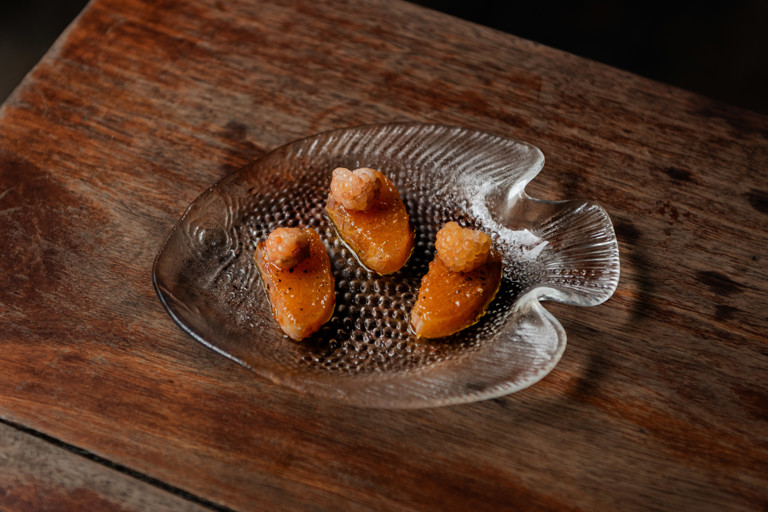
Cured trout, nasturtium flowers and golden raspberries
- medium
- 8
- 1 hour 10 minutes plus at least 1 week of infusing and overnight curing time
Bart Stratfold pairs floral, sweet, citrus and peppery flavour profiles in his delicate and aromatic starter at Timberyard in Edinburgh. Wild river trout is cured in a verbena berry cure and cold-smoked. It is brushed with an intensely-flavoured nasturtium flower paste – made from blending the flowers with neutral oil and salt – spritzed with a floral raspberry-infused vinegar that brings a sweet acidity and is garnished with spicy black pepper and golden raspberries. The trout, nasturtium flowers and raspberries offer a beautiful orange colour palette, making this an elegant start to any meal. The ingredients can all be interchanged with the alternatives given in the ingredients list, according to availability and season.
Bart says: "At Timberyard, we only use wild fish caught responsibly. We tend to rotate between Wild River Tweed trout, line-caught mackerel and line-caught bonito from the end of August onwards."
Ingredients
Metric
Imperial
- 1 trout fillet, ideally wild, skin-on and pin-boned, around 150-225g (you could also use line-caught mackerel, bonito, salmon, sea bass or bream)
- golden raspberries, currants, gooseberries or little slices of plum that are zingy and not too sweet, to serve
RASPBERRY VINEGAR
- 100g of raspberries, washed
- 500ml of white wine vinegar, or other light-coloured (non-aged) vinegar like cider
VERBENA BERRY CURE
- 500g of fine salt
- 10g of verbena berries, dried, or any type of peppercorn, coriander seed, star anise or fennel seed
- 500g of caster sugar
NASTURTIUM FLOWER PASTE
- 100g of nasturtium flower
- 100g of grapeseed oil
- 3g of fine salt
Equipment
- Preserving jar
- Spray bottle
- Cold-smoker
Method
For the raspberry vinegar, first sterilise a clip-top preserving bottle or jar
Place the raspberries in the bottle and cover them in the vinegar. Seal the jar and keep it in a cool, dark place for at least 1 week, but ideally 2-3 weeks
- 100g of raspberries, washed
- 500ml of white wine vinegar, or other light-coloured (non-aged) vinegar like cider
Once infused, strain it into a sterilised, airtight container or bottle, reserving some in a clean atomiser spray bottle
Start preparing the trout 2 days before you want to serve. First, make the cure. Grind 100g of the salt with the dried verbena berries until super fine. Fold through the rest of the salt and the sugar. This will make more than you need but you can keep any unused cure in the cupboard for a later date
- 500g of fine salt
- 10g of verbena berries, dried, or any type of peppercorn, coriander seed, star anise or fennel seed
- 500g of caster sugar
Roll the fish in enough of the cure to coat it well, then shake off any excess. Wrap very tightly in cling film and chill in the fridge overnight
- 1 trout fillet, ideally wild, skin-on and pin-boned, around 150-225g (you could also use line-caught mackerel, bonito, salmon, sea bass or bream)
The next day, wipe off any excess cure or liquid from the trout. Sit the fish on a wire rack set over a baking sheet or tray. Chill in the fridge uncovered overnight to dry
The next day, you can cold-smoke the fish if you like. Sit the fish skin-side down on ice packs and smoke for up to 30 minutes. It will keep in the fridge for a week, well wrapped
To make a flavourful nasturtium flower paste, blend the nasturtium flowers with the grapeseed oil in a blender for a few minutes, until fully broken down. Season with the salt (this weight of salt is 1.5% of the weight of the blended flowers and oil). This will make more than you need – leftover paste can be kept in the fridge for 2 weeks under oil and used in salads, on boiled potatoes and served alongside cold, roasted meats
- 100g of nasturtium flower
- 100g of grapeseed oil
- 3g of fine salt
To serve, slice the trout into slices the width of your little finger and cut into bite-size pieces. Brush the slices with the flower paste, crack a little pepper over the top and then spritz with the raspberry vinegar. Top each slice with a raspberry and serve
- golden raspberries, currants, gooseberries or little slices of plum that are zingy and not too sweet, to serve
Get in touch
Please sign in or register to send a comment to Great British Chefs.