
Pine-cured Chalkstream trout with Worcester berries, blackcurrant and jalapeño
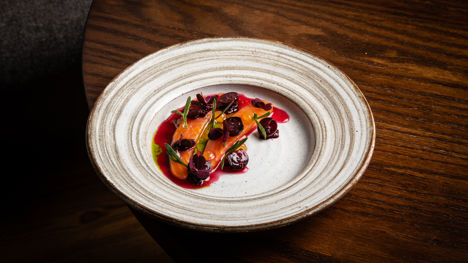
Jack Bond plays with acidity using hyper-seasonal blackcurrants and Worcester berries (think a cross between a blackcurrant and a gooseberry) for his elegant dish. The trout is cured in a pine needle cure, which gives it a beautiful fudgy texture. His blackcurrant and jalapeño kosho is inspired by yuzu kosho, a fermented Japanese condiment made from togarashi chilli peppers and salt. A bonito gel keeps this firmly in Japan for its inspiration, along with a blackcurrant mead dressing using sushizu (sushi vinegar). The dark purple colours and green tarragon oil make this a striking starter. At their restaurant The Cottage in the Wood, Jack and Beth Bond’s guests are given three flavours on the menu to describe the essence of each dish – in this case it is ‘Pine-cured Chalkstream trout, Worcester berry and blackcurrant’.
Ingredients
Metric
Imperial
BLACKCURRANT KOSHO
- 200g of jalapeños, halved lengthways, deseeded
- 200g of blackcurrants, washed
- 12g of fine salt
PINE TROUT CURE
- 50g of pine needles
- 1/2 lemon, zested
- 100g of salt
- 100g of caster sugar
- 1/2 side of trout, (Jack used Chalkstream) approximately 500g, skin removed and pin-boned
BONITO GEL
TARRAGON OIL
- 50g of vegetable oil
- 100g of tarragon leaves
WORCESTER BERRIES
- 24 Worcester berries, halved
- rice wine vinegar, to season
BLACKCURRANT DRESSING
- 30g of blackcurrant mead, chilled
- 10g of sushi vinegar, chilled
Equipment
- Sterilised jar or container
- Vacuum bag and machine
- Thermomix
- nut milk bag or muslin cloth
- Piping bags
- Squeezy bottle
Method
Start the fermented blackcurrant kosho at least 1 week before you want to serve the dish. Blend the jalapeños and blackcurrants to a coarse purée. Stir through the salt until evenly incorporated, then transfer to a sterilised jar, pressing the mixture down firmly to remove any air pockets. Cover the surface directly with cling film and seal with a lid. Refrigerate and allow to ferment for at least 1 week before using
- 200g of jalapeños, halved lengthways, deseeded
- 200g of blackcurrants, washed
- 12g of fine salt
Spread half of the cure evenly over the base of a tray. Lay the trout on top and cover completely with the remaining cure. Place in the fridge for 4 hours to cure
- 1/2 side of trout, (Jack used Chalkstream) approximately 500g, skin removed and pin-boned
Rinse the trout thoroughly under cold running water to remove the cure, then pat dry with a clean cloth or kitchen paper. Chill until needed
For the bonito gel, combine the sugar, white wine vinegar and water in a saucepan and bring to the boil, stirring until the sugar has dissolved completely. Leave to cool
- 125g of caster sugar
- 125g of white wine vinegar
- 125ml of water
Place 375g of the cooled pickling liquor into a vacuum bag with the rice wine vinegar, tamari, lime zest and juice and the bonito flakes. Seal under full vacuum and refrigerate for 24 hours to cold infuse. Alternatively, if you don’t have a vacuum packing machine you can infuse the base of the gel by giving everything a good stir until well mixed, then leave to infuse in an airtight container in the fridge (the flavours won’t be as strong)
Strain the infusion through a fine mesh sieve, pressing gently to extract as much liquid as possible. Weigh the strained liquid into a saucepan and calculate 3% of its weight. Measure this out in agar agar and whisk into the liquid. Bring to the boil then boil for 1 minute to activate the agar. Transfer to a container and leave to set completely
- agar agar, for setting
Blend until smooth then transferring to a piping bag and set aside in the fridge until needed
For the tarragon oil, heat the oil in a small pan to 120°C, whilst you put the tarragon leaves in a Thermomix (or see below if you don’t have a Thermomix)
- 50g of vegetable oil
- 100g of tarragon leaves
Carefully and quickly pour the oil over the tarragon and blend on a high heat until smooth. Pour the mixture into a large bowl set over a bowl of ice, then stir to ensure it cools down quickly. Alternatively, if you don’t have a Thermomix, place the tarragon and oil in a high-powered blender and blend on full speed until the mixture is smooth and steam begins to rise from the oil (about 3-5 minutes). Pour into a saucepan and gently bring to a boil to extract the chlorophyll, stirring occasionally – this will happen as soon as it comes to boil; the oil and solids will separate and turn the oil bright green. Cool as above
Once cold, hang in a nut milk bag in the fridge to drain out the oil. Place the drained oil into a piping bag and store this upright so any water falls to the tip of the piping bag. When ready to serve, snip the end and drain and water. Place the oil into a container or bottle and chill in the fridge until needed
Slice the cured trout into D-shaped slices approximately the thickness of a £1 coin
Just before serving, lightly season the Worcester berries with a splash of rice vinegar and whisk together all the ingredients for the blackcurrant dressing along with 10g of the tarragon oil
- 24 Worcester berries, halved
- rice wine vinegar, to season
- 30g of blackcurrant mead, chilled
- 10g of sushi vinegar, chilled
To plate, arrange the trout neatly on the plate. Pipe 5 small dots of bonito gel over and around the trout, followed by 5 dots of blackcurrant kosho. Arrange the Worcester berries on the gel and kosho. Garnish with the red butterfly sorrel and rock samphire. Finish by spooning the blackcurrant dressing around the plate and serving immediately
Get in touch
Please sign in or register to send a comment to Great British Chefs.