
Korean fried chicken with gochujang glaze
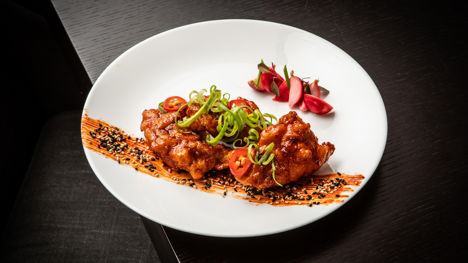
Judy Joo’s secret for Korean fried chicken's signature texture is fine matzo meal and vodka in the batter. She also uses boneless chicken thighs for an easy to eat, juicy result. The chicken is marinated, fried twice to ensure the chicken is cooked through and the batter is crispy, and then is coated in a gochujang glaze (made from soy, dark brown sugar, mirin, ginger, garlic and vinegar). Served with pickled radishes and spring onions.
Judy says: “Korean fried chicken is my ultimate signature dish – shatteringly crisp, lacquered in a sweet-spicy gochujang glaze, and built to be eaten with your hands.”
Ingredients
Metric
Imperial
- 4 boneless, skinless chicken thighs, (approx. 600g), cut in half so you have 8 pieces
- 300g of cornflour, for dredging
- neutral oil, such as vegetable, canola, or peanut, for deep-frying
- 1 tbsp of gochujang, to serve
- 2 tsp sesame seeds, ideally a mix of black and white, to serve
- 1 spring onion, cut into lengths, finely sliced lengthways and soaked in iced-water to curl up, to serve
- micro cress, to serve
- chives, cut into small batons, to serve
- 1 red chilli, or more to taste, thinly sliced, to serve
MARINADE
- 160g of warm water
- 40g of dark brown sugar
- 120g of Korean light soy sauce (guk-ganjang), you can replace this with Chinese light soy sauce and a splash of fish sauce, but it won’t be as good!
- 4 tsp lemon juice
- 4 tsp rice wine vinegar
- 2 tsp toasted sesame oil
- 1 tbsp of finely grated ginger
- 7g of garlic, (approx. 2 cloves), finely grated
QUICK-PICKLED RADISHES
- 50g of hot water
- 90g of caster sugar
- 5g of flaky sea salt
- 65g of cold water
- 150g of rice wine vinegar
- 160g of breakfast radishes, quartered
GOCHUJANG SAUCE
- 45g of gochujang
- 1 tsp gochugaru
- 115g of Korean light soy sauce (guk-ganjang)
- 4 tsp rice wine vinegar
- 1 tbsp of mirin
- 80g of dark brown sugar
- 15g of garlic, (approx. 4 cloves), finely grated
- 1 tbsp of finely grated ginger
- 2 tsp toasted sesame oil
- 3/4 tsp cornflour, mixed with 1 tsp water to make a slurry
BATTER
- 140g of cornflour
- 70g of fine matzo meal
- 70g of plain flour
- 20g of garlic powder
- 20g of onion powder
- 2 tsp flaky sea salt
- 1/4 tsp freshly ground black pepper
- 1/4 tsp baking powder
- 430g of water, chilled
- 140g of vodka, chilled
Equipment
- Temperature probe
- Deep fat fryer
Method
For the marinade, whisk the warm water and brown sugar together in a large bowl until fully dissolved. Stir in the remaining ingredients with a pinch of black pepper and leave to cool. Store in the fridge until needed
- 160g of warm water
- 40g of dark brown sugar
- 120g of Korean light soy sauce (guk-ganjang), you can replace this with Chinese light soy sauce and a splash of fish sauce, but it won’t be as good!
- 4 tsp lemon juice
- 4 tsp rice wine vinegar
- 2 tsp toasted sesame oil
- 1 tbsp of finely grated ginger
- 7g of garlic, (approx. 2 cloves), finely grated
Add the chicken to the marinade and toss to coat. Cover and chill for at least 3 hours and up to 6 hours (avoid marinating overnight as it can cure the meat)
- 4 boneless, skinless chicken thighs, (approx. 600g), cut in half so you have 8 pieces
For the quick-pickled radishes, whisk the hot water, sugar, and salt in a medium bowl until fully dissolved. Stir in the cold water and rice vinegar, then add the radishes and press down to submerge. Cover and chill for at least 30 minutes (or up to 3 days)
- 50g of hot water
- 90g of caster sugar
- 5g of flaky sea salt
- 65g of cold water
- 150g of rice wine vinegar
- 160g of breakfast radishes, quartered
For the gochujang sauce, combine all the ingredients except the cornflour in a medium saucepan. Warm over a medium heat, whisking occasionally, until the has sugar dissolved
- 45g of gochujang
- 1 tsp gochugaru
- 115g of Korean light soy sauce (guk-ganjang)
- 4 tsp rice wine vinegar
- 1 tbsp of mirin
- 80g of dark brown sugar
- 15g of garlic, (approx. 4 cloves), finely grated
- 1 tbsp of finely grated ginger
- 2 tsp toasted sesame oil
Whisk the cornflour slurry into the sauce and bring it to a brief simmer, whisking constantly until smooth, then pass through a fine sieve for a glossy, smooth glaze. Keep warm
- 3/4 tsp cornflour, mixed with 1 tsp water to make a slurry
For the chicken batter, mix all the dry ingredients together in a large bowl. Set aside
- 140g of cornflour
- 70g of fine matzo meal
- 70g of plain flour
- 20g of garlic powder
- 20g of onion powder
- 2 tsp flaky sea salt
- 1/4 tsp freshly ground black pepper
- 1/4 tsp baking powder
In a separate bowl, combine the water and vodka and chill until you’re ready to fry
- 430g of water, chilled
- 140g of vodka, chilled
Drain the chicken, discarding the marinade, and pat the pieces dry on kitchen paper
Place most of the cornflour in a wide, shallow dish (you can top up if needed, to prevent wastage)
- 300g of cornflour, for dredging
Working in batches, toss the chicken in the cornflour to coat thoroughly; shake off all of the excess and lay out in a single layer on a wire rack over a tray
Preheat the oven to 90°C. Heat the oil in a deep pan over a medium-high heat, or preheat a deep-fat fryer to 160°C. Set up a second wire rack over a tray for the cooked chicken
- neutral oil, such as vegetable, canola, or peanut, for deep-frying
Just before frying, combine the wet and dry batter ingredients: pour the chilled vodka and water mixture into the dry mixture and whisk to a loose, paint-like consistency – mixing too early encourages gluten development, which dulls the crispness, so do this at the last minute
For the first fry – and working in batches of 3-4 pieces – dip each dredged piece of chicken into the batter, letting the excess drip off, then carefully lower into the oil. Hold the piece below the surface with tongs for the first 5-10 seconds so the batter sets and the chicken doesn’t stick, then release. Fry for about 4 minutes, until deeply golden and crisp, turning occasionally, then remove from the oil and allow to rest 2 minutes. Repeat until all of the chicken has been fried
For the second fry, heat the oil to 190°C
Working in batches again, refry all of the pieces for 1-2 minutes until deep golden, or until a thermometer in the thickest part reads 74°C. Keep the pieces in the oven on a rack over a baking tray to keep warm whilst you cook the rest
Brush the fried chicken with the warm sauce in a thin, even layer
Drain the pickled radishes
To plate, use a pastry brush to paint a stripe of gochujang across each plate (loosen the gochujang with ½ tsp water if it is too stiff). Sprinkle the white and black sesame seeds over the stripe while the gochujang is still tacky
- 1 tbsp of gochujang, to serve
- 2 tsp sesame seeds, ideally a mix of black and white, to serve
Arrange 2-3 pieces of fried chicken on top of each stripe. Garnish with the curly spring onions and sliced chilli. Lay a few radish pieces alongside, then finish with micro cress and chive batons. Serve immediately
- 1 spring onion, cut into lengths, finely sliced lengthways and soaked in iced-water to curl up, to serve
- 1 red chilli, or more to taste, thinly sliced, to serve
- micro cress, to serve
- chives, cut into small batons, to serve
Get in touch
Please sign in or register to send a comment to Great British Chefs.