
Judy Joo
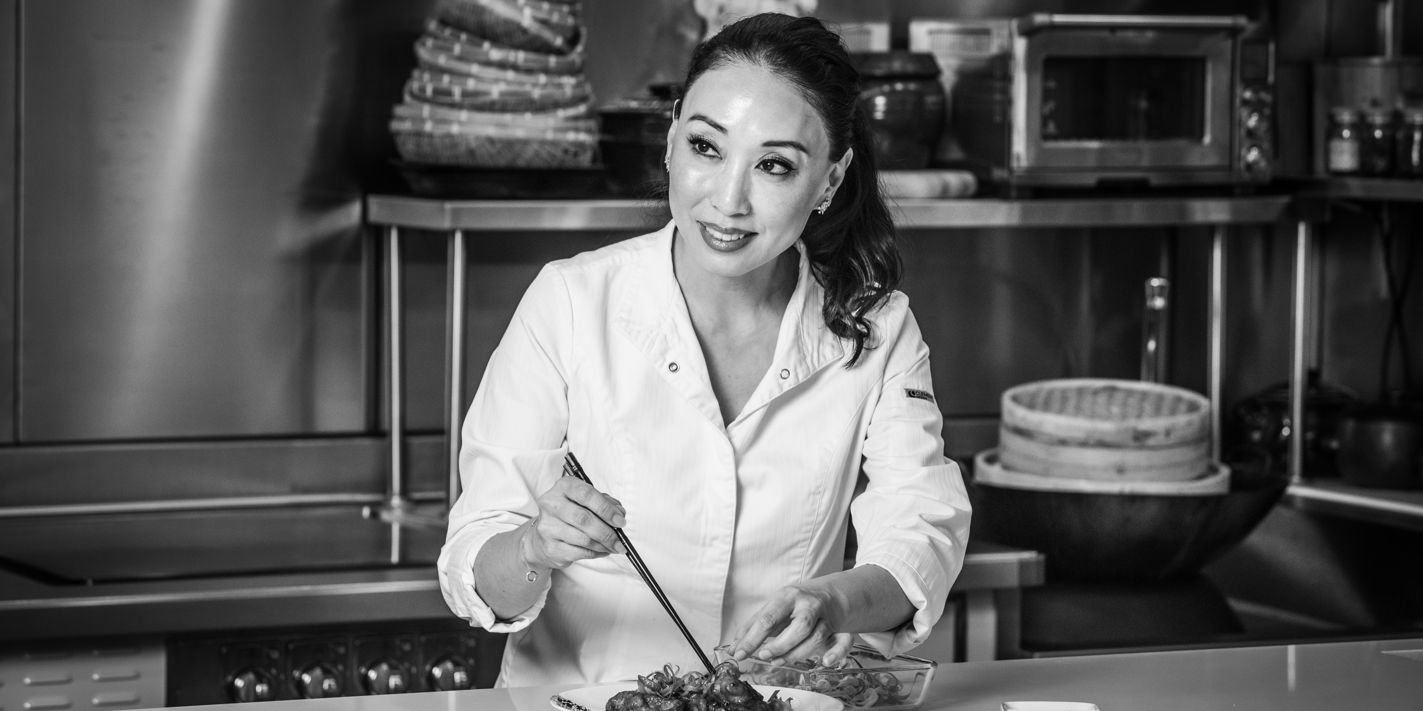
Judy Joo
Korean culture is enjoying a bit of a golden age in the UK at the moment. K-pop, K-drama, K-beauty; it’s all part of a phenomenon known as Hallyu – a growing global interest in all things Korean.
A big part of that is, of course, Korean food. The likes of kimchi and gochujang have well and truly hit the mainstream, with a raft of other Korean ingredients now available in supermarkets. But it wasn’t always like that; even just five years ago you’d need to visit a specialist Asian grocer to stock your (K-)pantry. That shift is down to many things – but Judy Joo, the true pioneer of Korean food’s popularity in the UK – is certainly one of the most important driving forces.
Growing up in New Jersey to Korean immigrant parents, Judy wasn’t part of a Korean expat community at all – she and her sister were the only non-white children at school. Finding Korean products to buy was almost impossible, so her parents were often making everything from scratch. ‘There was always something fermenting or seaweed drying in all corners of our house, so it smelled really funky all the time,’ says Judy. ‘I never wanted my friends to come round!’
Cooking professionally was never the ambition. After studying engineering at Columbia University, Judy entered the high-stakes world of trading, spending five years on Wall Street. ‘It was a very cut-throat environment and I could easily work 120 hours a week,’ she explains. ‘I didn’t enjoy the lifestyle at all – sure, you make a ton of money but they really take everything from you. You have no free time at all and you’re on the clock 24/7. At the end of the day you’re just moving money from one place to another, and I think even if you only have a little bit of creativity in your body, there’s going to come a time when you need to scratch that itch in a job like that.’
That creative yearning soon proved impossible to ignore, and Judy eventually walked away from the trading floor to enrol as a pastry chef at the French Culinary Institute in New York. ‘I always loved restaurants and just knew I wanted to be a part of that world,’ she explains. ‘I decided on pastry because of my scientific engineering background. I also liked the fact that all pastry chefs can cook, but not all chefs can do pastry.’
After spending a few years working in food media, developing recipes for magazines and working for nonprofits in Harlem, Judy and her then-husband moved over to London in 2004 – which redirected her career entirely. ‘London is one of the greatest food cities in the world today, but back then the food scene was pretty diabolical,’ she remembers. ‘You couldn’t even get a good cocktail.’ But after a meal at Gordon Ramsay’s restaurant on Royal Hospital Road, she realised something special was happening there and applied for a stage (chef internship). She was accepted, fell in love with the allure and romance of restaurants, and spent the next two-and-a-half years working across his empire; not just in pastry, but on any section that needed it.
It’s not often you meet someone who sees being a chef as less stressful than what they did before – but Judy is a rare case. ‘The hours were fine and the pressure was a lot lower because you weren’t going to crash the economy by messing up a cake or anything,’ she says. ‘But I wasn’t used to being on my feet for 15 hours a day – the physical nature of working in a kitchen certainly took some getting used to. The first few months were also pretty brutal – it was almost a hazing, spending all day juicing lemons with only a fork, or picking spinach leaves for an entire shift.’
After the trial-by-fire of a Ramsay kitchen, Judy was ready for pretty much anything. Her food media background came back into play when she made her television breakthrough on Iron Chef UK in 2011, winning it and becoming the second female Iron Chef in the world. That made waves back in the US, and eventually culminated in her own TV show, Korean Food Made Simple – a globally aired series which was the first to shine a spotlight on the country’s cuisine. Cookbook deals soon followed, and Judy became the go-to authority on Korean food in the US.
After enjoying stateside success, Judy realised there was a huge gap in the market for Korean food in the UK. It was basically non-existent, bar a handful of places catering to Korean communities in London. So in January 2015, she opened her own restaurant, Jinjuu, in Soho. ‘That really put Korean food on the map in the UK,’ she says. ‘I was the first Korean chef to position the cuisine at this level, but it really confused people. I remember the top food critics coming in and comparing the food to Thai cuisine, saying that it lacked lemongrass and coconut and lime. We don’t grow those ingredients in Korea! I was so shocked at the ignorance, but back then Asia was generally seen as a single entity in food.’
That initial ignorance didn’t stop Jinjuu’s success, however, and outposts soon opened in Mayfair and further afield in Hong Kong. The dishes served weren’t necessarily authentic, traditional Korean fare; they often combined Korean flavours with more familiar western concepts to make the menu less intimidating. ‘We had kimchi bloody marys and bulgogi beef burgers… I wanted to make Korean food welcoming and inviting, so I knew I had to adapt. I’m also a French-trained Korean-American Londoner, so my food isn’t going to be super traditional in the same way as you’d find in Korea.’
Judy left Jinjuu in 2019 (‘right before Covid hit, so it was actually brilliant timing’) with an idea of doing something slightly more casual and accessible. ‘My business partner and I always noticed that our Korean fried chicken had this cult status around it, and we felt it deserved its own concept,’ she explains. That gave birth to Seoul Bird which, after a rocky start of opening then closing multiple times during the Covid lockdowns, established itself in London before opening branches in Edinburgh and New York (and no doubt with more to come). She also continues to write cookbooks, riding the Hallyu wave and ever-growing fascination with all things Korean.
It’s hard to emphasise just how important Judy’s influence has been on getting the word out about Korean food. Seeing kimchi on the supermarket shelves or knowing the flavour profile of gochujang is commonplace now, but without her initial push it might still be a lesser-known cuisine in the UK. ‘I grew up being embarrassed by my lunchbox; now I’m serving Korean food at Tottenham Hotspur Stadium and Madison Square Gardens,’ she says. ‘You can get kimchi fried rice at a baseball stadium in New York. I never thought I’d see that.’