
Cardamom crêpes Suzette
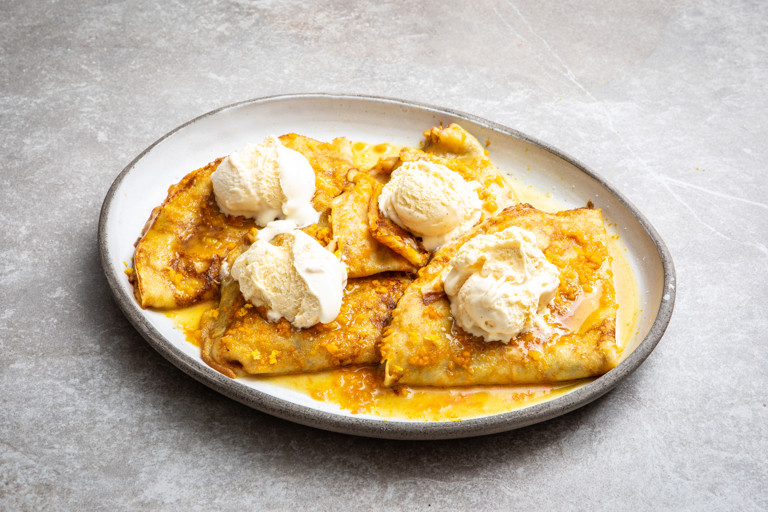
This French crêpe classic is all about the dramatic flambé – which always elicits gasps of delight when done in front of your guests. We’ve added a sprinkle of cardamom to bring out the floral notes of the liqueur and citrus. The best way to celebrate Shrove Tuesday.
Crêpes Suzette originated completely by accident in 1895 when a young waiter managed to ignite the orange liqueur in the sauce (we’re not quite sure how!). After realising that the flames caramelised the sugars and made it tastier, the flambéeing became a change to offer some tableside theatrics in French restaurants.
To make perfect crêpes at home, the keys are making sure the batter is the right consistency and that it’s had enough resting time. Making sure that the batter is very thin, almost a cream like consistency, to keep the crepes thin and delicate.
The consistency of the batter should be quite thin (think single cream). This keeps them thin and delicate. Straining the whisked batter through a fine sieve also ensures there are absolutely no lumps.
Overmixing the batter can create tough, rubbery crêpes, so make sure to only mix until it is smooth. Too much mixing can cause the gluten to overdevelop and leaves you with a chewier texture.
Resting the batter is important because it allows the flour to properly absorb all the liquid. It also means any gluten that’s been activated by the whisking can relax (meaning less chewiness) and ensures everything is nice and consistent. Resting for just 45 minutes at room temperature will do the trick, but leave the batter covered overnight in the fridge to really let it rest.
When it comes to cooking the crêpes, bring the pan up to temperature slowly over a medium heat instead of rushing over a high heat. If the heat is too high, the batter sets too quickly and you cannot spread it thinly enough to the edges of the pan. If it is too low, you risk the crêpes turning rubbery.
Add butter to the frying pan before cooking the first crêpe, but wipe away any excess. You do not want the crêpes drowning in butter as they cook. You may need to re-butter the pan between crêpes, but how often depends on the pan you are using. Finally, make sure to gently whisk together the mix before ladling it into the frying pan; the flour tends to settle at the base of the mixing bowl after resting and this helps to keep each crêpe consistent.
Ingredients
Metric
Imperial
- 110g of plain flour
- 3 tbsp of caster sugar
- 2 Freshlay Farms Golden Yolker® eggs
- 275ml of whole milk
- 4 oranges, 1 zested and all 4 juiced
- 120g of unsalted butter, melted and cooled, plus a little extra to cook the crêpes
- 1 tsp ground cardamom
- 2 tbsp of golden caster sugar, or regular caster sugar
- 80ml of Grand Marnier
- vanilla ice cream, to serve (optional)
Method
Sift the flour, sugar and a pinch of salt into a mixing bowl, then create a well in the centre and add the eggs plus a dash of milk. Begin to gently whisk them together; once the mixture begins to thicken, slowly incorporate the rest of the milk
- 110g of plain flour
- 3 tbsp of caster sugar
- 2 Freshlay Farms Golden Yolker® eggs
- 275ml of whole milk
Once the mixture is smooth, whisk in the zest of 1 of the oranges and 70g of the melted butter. Strain through a fine sieve into a jug, then cover with cling film, ensuring it is touching the batter to prevent a skin forming. Leave to rest at room temperature for 45 minutes
- 1 blood orange, zested
- 70g of unsalted butter, melted and cooled
Heat a large frying pan slowly over a medium heat. Add a small knob of butter and, once foaming, pour in enough of the batter to coat the base when you swirl the pan around. Leave it to cook undisturbed for a minute, then use a thin spatula to lift an edge. If it easily lifts and is browned on the base, carefully flip the crêpe and cook on the other side for another minute
Transfer the crêpe to a plate, then continue cooking more of them until all the batter is used up. Keep adding a little butter to the pan as and when it needs it and put a piece of baking paper between each crêpe as you stack them up. They’ll get reheated later
Add the remaining 50g butter to a saucepan over a medium heat. Pour in the juice of 4 of the oranges, then add the cardamom, sugar and half the brandy. Leave to heat through gently
- 50g of unsalted butter, melted and cooled
- 4 oranges, juiced
- 1 tsp ground cardamom
- 2 tbsp of golden caster sugar, or regular caster sugar
- 40ml of Grand Marnier
One at a time, add the crêpes to the warm sauce, then fold them in half and half again to create a triangular shape. Arrange them on a large serving platter with a lip
Once all the crêpes are warmed through and on the platter, pour over any remaining sauce, then sprinkle over the remaining brandy. Use a blowtorch to flambé them (at the table for extra wow factor). Serve topped with ice cream (if you like)
- 40ml of Grand Marnier
- vanilla ice cream, to serve (optional)
Get in touch
Please sign in or register to send a comment to Great British Chefs.