The versatility of Japanese rice
by Great British Chefs27 February 2026

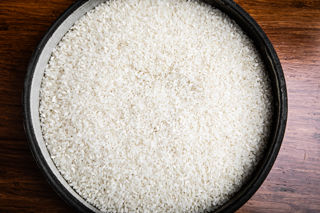
Rice is the most consumed food in the world – so it's no wonder over that it's been cultivated in different ways over the millennia. While it's easy to think of it as a commodity, there are countless varieties and types of rice that have different tastes and textures.
In Japan, rice is serious business. Each prefecture and region has its own types of rice, which are suited to certain dishes and cooking techniques. But while Japanese rice is, obviously, brilliant in Japanese cooking, it can be used for so much more.
We teamed up with the Japanese External Trade Organisation (JETRO) to shine a light on three of these rice varieties, collaborating with chefs Masaki Sugisaki (of Dinings SW3 in London) and Patrick Withington (of Erst in Manchester) to see how they would use the grains in their cooking.
The result is the six recipes below – covering Japanese dishes with a European twist and Mediterranean-inspired small plates with rice at its core. Take a look, give them a go and realise why Japanese rice is more versatile than it might seem.
A simple dish which allows the sweet salinity of the mussels to really shine, this is a classic risotto apart from one twist – the rice is Japanese short-grain rather than arborio or carnaroli. This completely transforms the texture of the risotto and shows how the flavour of the grains themselves can have an impact.
For a lot of us, Japanese rice in Japanese cooking often equals sushi, but it of course has so much to offer. This recipe is based on a traditional Japanese rice dish called tai meshi, but features sea bass instead of the usual bream. The sea bass on top is cured in a brine of sake, dashi and yuzu kosho, lending an incredible flavour to the fillets.
Black pudding is one of the unsung heroes of British cuisine. It might not sound quite as sophisticated as its French counterpart boudin noir or contain the spice of its Spanish cousin morcilla, but it more than deserves to be held in the same high regard internationally. Chef Patrick Withington puts his own spin on the sausage, replacing the oats with Japanese short-grain rice for a different texture and throwing apple juice, lardo, paprika, cumin and pancetta into the mix. Served simply with peppers and a four-ingredient sauce, it’s a striking dish which is easier than you’d think to make yourself.
Inari sushi is one of the more popular types of sushi, which sees rice stuffed inside a ‘pouch’ of braised, sweet fried tofu called abura-age. Chef Masaki puts his own twist on the dish by using ingredients such as date molasses, palm sugar and white balsamic vinegar in his sushi vinegar and for braising the abura-age, before combining the rice with little nuggets of smoked eel.
Onigiri are Japanese rice balls, often shaped into a triangle, which then become yaki-onigiri once grilled. Chef Masaki Sugisaki brushes the crispy grilled onigiri with a special miso before serving them in ochazuke; a green tea-infused dashi. It’s a stunning, beautiful dish which allows the texture and flavour of the rice to really shine.
Rice puddings can often be too reliant on vanilla – this one leans into the flavour of bay instead, allowing the actual sweetness and flavour of the grains themselves to shine through. On top is a sorbet made with more Japanese rice and olive oil and the meeting of warm pudding and cold sorbet is a joy. The rhubarb roots the dish in the season, but it could easily be replaced with other fruits depending on the time of year.
Please sign in or register to send a comment to Great British Chefs.