
Torta ahogada (drowned torta)
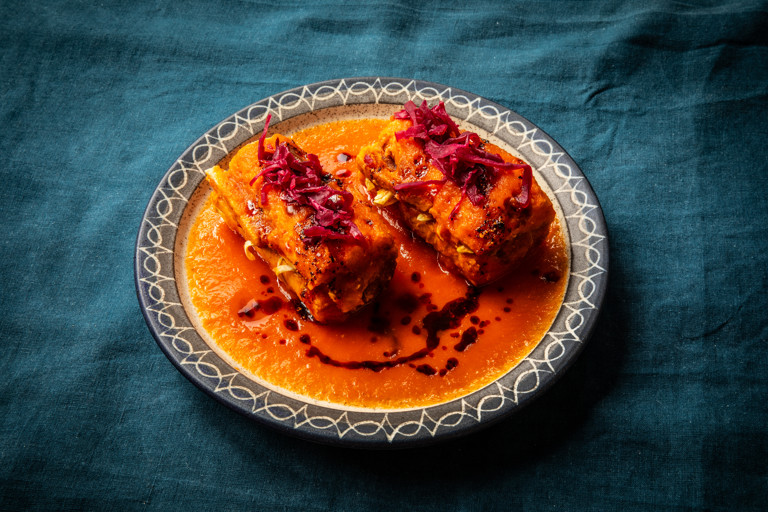
“A torta is a traditional Mexican sandwich made with a thick white bread roll called a telera or bolillo that is similar to a baguette. The torta ahogada (drowned torta) from Jalisco has a special place among tortas in Mexico, as it is stuffed with carnitas (slow-cooked pork) and onions and drowned in a spicy tomato and arbol chilli salsa. This torta is made from a special type of bread called birote, which is a bit tougher than the usual torta bread so that it can withstand the abundant salsa without disintegrating. I have made a simpler version of carnitas using pork shoulder, replaced the birote with slowly toasted baguettes, and finished it all off with Xnipec. Note this recipe requires overnight cooking.”
These recipes are taken from Mexican Soul: A New Style of Cooking by Santiago Lastra (£30, Quadrille Publishing Ltd).
Santiago says: “Xnipec means ‘dog’s nose’ in Mayan, and this spicy sauce from the Yucatán region is named as such because it makes your nose run like a dog’s wet nose when you eat it. It adds texture, spice and acidity to any dish, but is normally used to finish fatty, rich and umami dishes like cochinita pibil (slow-roasted pork) or turkey panuchos (refried tortillas stuffed with beans and topped with meat), or to brighten up seafood, such as in the traditional fish dish tikin xic. It’s usually made with sour orange; in the recipe below we use a mix of lime and orange, as in many regions outside Yucatán.”
Ingredients
Metric
Imperial
- 1 pork shoulder, bone-in, whole or in chunks
- 15g of sea salt flakes
- 5g of black peppercorns, finely ground
- 4l vegetable oil
- 4 baguettes
- 1 hispi cabbage, cored and finely chopped
TOMATO CALDILLO
- 1kg tomatoes
- 2 onions
- 3 garlic cloves
- 2l water
- 170g of chipotle paste, (or you can use equal parts smoked paprika, cayenne pepper, honey, cider vinegar and water as an alternative)
- 3g dried bird’s eye chillies, (around 2-3 chillies), or to taste
- 10g of sea salt flakes
- 40ml of vegetable oil
XNIPEC
- 200ml of lime juice, (from about 5 limes)
- 100ml of orange juice, (from about 1 orange)
- 1/2 red onion, sliced
- 1/2 fresh habanero chilli, thinly sliced
- 2 pinches of dried oregano
- 1 pinch of sea salt flakes
Method
For the pork, preheat the oven to 105°C
Season the pork shoulder all over with the salt and pepper, then place it in a large casserole dish, pour over the oil and cover with foil or a lid. Cook in the oven overnight, for 12-14 hours, until the meat is falling off the bone
- 1 pork shoulder, bone-in, whole or in chunks
- 15g of sea salt flakes
- 5g of black peppercorns, finely ground
- 4l vegetable oil
For the tomato cardillo, put the tomatoes, onions, garlic and water into a large saucepan over a high heat and bring to then boil, then cook for 45 minutes
- 1kg tomatoes
- 2 onions
- 3 garlic cloves
- 2l water
Strain the broth, reserving the solids. Put the solids into a food processor and add the chipotle paste, chillies and salt along with 1 litre of the broth and blend until smooth. If you want to control the spice level, add the chillies one by one and taste as you go
- 170g of chipotle paste, (or you can use equal parts smoked paprika, cayenne pepper, honey, cider vinegar and water as an alternative)
- 3g dried bird’s eye chillies, (around 2-3 chillies), or to taste
- 10g of sea salt flakes
Heat the oil in a clean saucepan over a medium heat and fry the sauce for 10-15 minutes until it turns deep red (this process makes the caldillo sweeter and more umami), stirring constantly to ensure it doesn’t stick. Store in the refrigerator for up to 4 days
- 40ml of vegetable oil
For the Xnipec, strain the lime and orange juices into a bowl. Add the onion and mix together, then leave to rest for 30 minutes. If you want to serve straight away, steep the onion in boiling water for 1 minute to tenderise, then drain and combine with the juices
- 200ml of lime juice, (from about 5 limes)
- 100ml of orange juice, (from about 1 orange)
- 1/2 red onion, sliced
Finish with the chilli, oregano and salt. Serve at room temperature. The sauce will keep in the refrigerator for a couple of days
- 1/2 fresh habanero chilli, thinly sliced
- 2 pinches of dried oregano
- 1 pinch of sea salt flakes
The next day, a couple of hours before you want to serve, remove the pork pan from the oven, then set aside to rest for 2 hours. This step stops the meat from becoming dry
Once rested, remove the meat from the oil with tongs, then roughly pull the meat from the bones with your hands. Chop the meat into roughly 2cm pieces and reserve the oil
Pour the tomato caldillo into a saucepan and bring to a simmer. Spoon a little of the oil you cooked the pork in into a frying pan and place over a medium-low heat
Slice open the baguettes but do not completely cut them in half, then toast them in the pork oil on both sides until golden (make sure you don’t break them)
Build the tortas by filling the baguettes with the pork, cabbage and some of the Xnipec
- 1 hispi cabbage, cored and finely chopped
Using tongs, submerge the tortas in the hot caldillo and then place them directly on plates. Finish with more hot caldillo on the table and Xnipec on top of the torta. This dish is traditionally eaten with the hands, while wearing gloves. Have fun!
Get in touch
Please sign in or register to send a comment to Great British Chefs.