
Pistachio monkfish with smoked aubergine purée, buttermilk dressing and lime pickle
- medium
- 4
- 2 hours 40 minutes plus 1 week pickling time, 4 hours cold-smoking time, 3 hours roasting time and 1 hour 30 minutes slow-cooking time
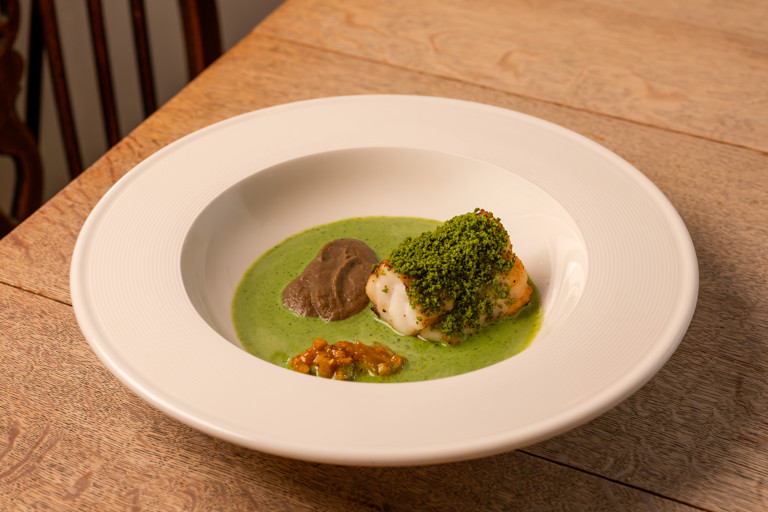
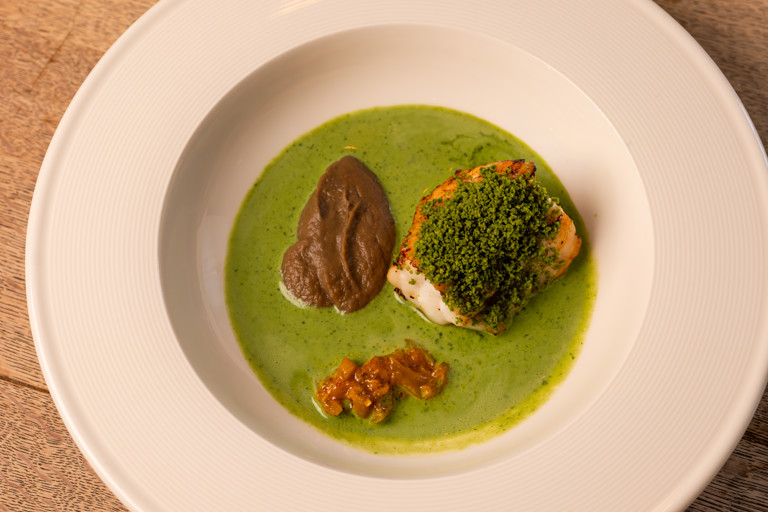
The natural meatiness of monkfish allows it to stand up well to punchy accompaniments. Ben Tunnicliffe draws on sharp and slightly sweet lime pickle, a smoky aubergine purée, a bright coriander and buttermilk dressing and a pistachio crumb to provide punchy vitality and energy to his monkfish dish. Making your own lime pickle is easier than you think and incredibly rewarding – just make sure to start it at least a week before you want to make the dish.
Ben has provided the method for cooking the fish in a pan, but you can also oil the fish and place it on a hot plancha if that’s what you have. And if you do not have a cold-smoker, you can omit the smoking for the aubergine purée; the flavour will be slightly different but still delicious.
Ingredients
Metric
Imperial
- monkfish loin, approx. 600g
- 1/2 tsp fennel seeds
- 30g of salt
- 30g of caster sugar
- rapeseed oil, for cooking
LIME PICKLE
- 500g of lime, (about 7), organic and unwaxed is best
- 8 large garlic cloves, finely chopped
- 2 tsp Kashmiri chilli powder
- 1 tsp ground turmeric
- 30g of fine sea salt
- 1 tsp black mustard seeds
- 1/2 tsp fenugreek seeds
- 1 tsp cumin seeds
- 1 star anise
- 1 tsp caster sugar
- 125ml of vegetable oil, plus 30-50ml extra, if needed
- 30g of ginger, finely chopped
- 3 green chillies, deseeded and chopped
- 100ml of white wine vinegar
- 100g of granulated sugar
AUBERGINE PURÉE
- 1kg aubergine, halved lengthways, flesh scored halfway through
- 3 large shallots, very finely sliced
- olive oil, for cooking
PISTACHIO CRUST
- 80g of pistachio nut
- 1 garlic clove
- 5g of honey
- 2g of salt
BUTTERMILK DRESSING
- 30g of coriander
- 10g of honey
- 1 small garlic clove
- 1 lime, zested and juiced
- 200ml of buttermilk
Equipment
- Temperature probe
- Cold-smoker
Method
Start the lime pickle about a week before you want to serve the dish. Put the limes in a saucepan and cover with water. Place a small heatproof plate or pan lid on top to keep the limes submerged, then bring to a boil over a medium heat and simmer for 30-40 minutes until the limes are tender. Remove the limes, pat them dry with kitchen paper, and discard the cooking water
- 500g of lime, (about 7), organic and unwaxed is best
Once the limes are cool enough to handle, chop them (peel and pith included) into 1cm chunks and tip everything, including any juice, into a large bowl. Stir in the chopped garlic, chilli powder, turmeric and salt, and set aside for 1 hour
- 8 large garlic cloves, finely chopped
- 2 tsp Kashmiri chilli powder
- 1 tsp ground turmeric
- 30g of fine sea salt
Heat a dry frying pan over a medium-low heat, and toast the mustard seeds, fenugreek, cumin and star anise for about 40 seconds until aromatic, stirring constantly. Grind in a pestle and mortar or spice grinder with the sugar to a powder
- 1 tsp black mustard seeds
- 1/2 tsp fenugreek seeds
- 1 tsp cumin seeds
- 1 star anise
- 1 tsp caster sugar
Add the ground spice mix to the limes, stir well and transfer into a sterilised jar. Seal and leave to pickle in a warm place or on a sunny window ledge for 3 days for the flavours to mature until it smells sharp and pungent (check after 2 days). Stir the limes once a day with a metal spoon to ensure they are evenly coated in the spice mix and clean any spillage around the rim of the jar before resealing
After 3 days, heat the oil in a large pan over a medium-high heat (you will add the limes back into this in step 7) and fry the ginger and green chillies for 2-3 minutes, until the ginger starts to turn golden
- 125ml of vegetable oil
- 30g of ginger, finely chopped
- 3 green chillies, deseeded and chopped
Reduce the heat and allow to cool slightly, then add the vinegar and sugar and simmer over a low heat until the sugar has dissolved – top up with a tablespoon of water if the liquid reduces
- 100ml of white wine vinegar
- 100g of granulated sugar
Turn the heat off, add the steeped limes and mix together thoroughly. Set aside to cool, then spoon the pickle back into the same jar. Using a metal spoon, push the limes down into the jar so that they are covered by the spicy oil, adding a little extra oil, if needed. Seal the jar and leave to mature for 3-4 days before using. It will keep for 3 months at room temperature – its flavour will improve and deepen (this will make more than you need; Ben enjoys it in a mature Cheddar and lime pickle sandwich)
- vegetable oil, 30-50ml extra, if needed
For the smoked aubergine, drizzle some olive oil over each cut side of the aubergines then put into a cold-smoker and smoke for 4 hours (Ben uses a Bradley cold-smoker)
- 1kg aubergine, halved lengthways, flesh scored halfway through
- olive oil, for cooking
Trim the monkfish of any white or mottled black purple sinew and cut into 150g portions. Set aside
- monkfish loin, approx. 600g
To make a cure for the fish, blitz the fennel seeds in a spice grinder to a coarse powder, then place in a bowl with the salt and sugar and mix thoroughly. Scatter a thin layer of the fennel cure over a tray, lay the monkfish portions on top and scatter a couple of tablespoons of the cure over the top. Place in the fridge for 12 minutes
- 1/2 tsp fennel seeds
- 30g of salt
- 30g of caster sugar
Wipe off and discard the cure, then wash the fish well and pat dry with kitchen paper. Transfer to a tray lined with a clean cloth and place in the fridge to air-fry and firm up for at least 2 hours
Preheat the oven to 140°C. Once the aubergines are smoked, put the halves back together, wrap in foil and bake for 3 hours, or until the flesh is very soft. Remove and leave to cool slightly
Meanwhile, place the shallots in a saucepan over a very low heat with 2 tablespoons of olive oil and sweat with a lid on for at least 1 hour, adding splashes of water if needed (it is important to cook the shallots on the lowest heat possible so they become very soft but without colour)
- 3 large shallots, very finely sliced
Once the aubergine is cool enough to handle, unwrap and remove the flesh from the skins, capturing all the juice and discarding the skins
Transfer the aubergine flesh and all of the juice to the shallots with a small pinch of salt (do not over-season at this stage) and cook over a low heat until almost all of the liquid has evaporated, stirring occasionally – pay close attention to it to avoid it catching
Transfer the mixture to a high-powered blender and blitz to a smooth purée. Strain through a fine sieve and adjust the seasoning as necessary. Cool and store in an airtight container in the fridge until needed
For the pistachio crust, place all of the ingredients into a blender or food processor and blitz to a ground almond consistency. Keep in an airtight container until needed
- 80g of pistachio nut
- 1 garlic clove
- 5g of honey
- 2g of salt
For the buttermilk dressing, place all of the ingredients and a small pinch of salt into a high-powered blender and blitz for about 30 seconds until smooth. Taste and adjust the seasoning and set aside in the fridge until needed – remove from the fridge 30 minutes before serving and stir before use
- 30g of coriander
- 10g of honey
- 1 small garlic clove
- 1 lime, zested and juiced
- 200ml of buttermilk
Preheat the oven to 180°C
Place a splash of rapeseed oil in a large frying pan over a medium heat. Season the fish then seal all over for 1 minute or so in the hot oil until golden. Transfer to a tray and place into the oven. Cook until the fish is 57°C (the cooking time will depend on the thickness of the monkfish and the time spent searing the fillets). If your pan is ovenproof you can transfer it directly into the oven
- rapeseed oil, for cooking
Meanwhile, heat the aubergine purée and keep warm
Once the monkfish is cooked, remove the tray from the oven and flip the fillets over (this is your presentation side). Dust with a layer of pistachio crumb
To serve, place 50ml of the buttermilk dressing into a serving bowl and place 1 teaspoon of lime pickle on the side. Top with the monkfish and a large spoonful of the aubergine purée
Get in touch
Please sign in or register to send a comment to Great British Chefs.