
Pan-fried turbot with smoked butter hollandaise and asparagus
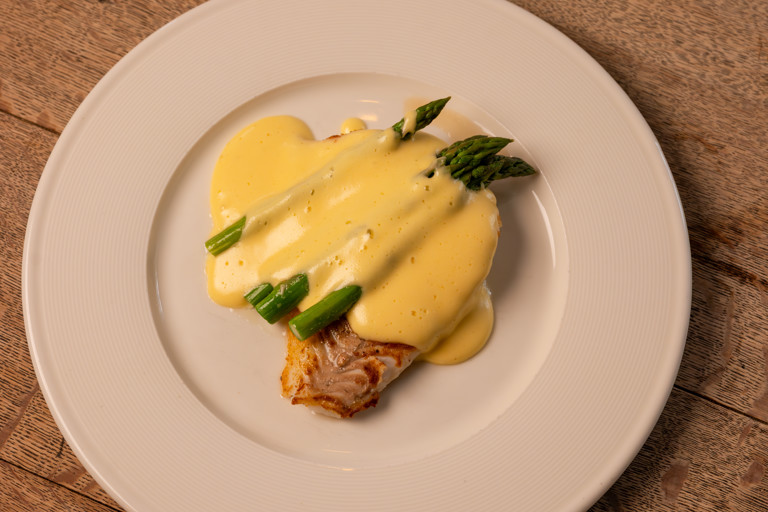
Ben Tunnicliffe shares his classical cookery techniques in his turbot dish – or as he calls it ‘the king of fish’. He cold-smokes butter to make a hollandaise and serves this over perfectly tender asparagus and caramelised fillets of turbot. Ben provides his method for traditional pan-frying and the plancha-cooking method he uses at his restaurant The Tolcarne Inn in Cornwall, so you can choose depending on your kitchen setup. See the notes section for Ben’s advice on sourcing turbot and for making hollandaise.

Ben on turbot: “When sourcing a whole turbot, look for a fish with bright eyes, slimy skin, bright deep red gills behind the flaps at the back of the head, and no smell apart from the sea! If sourcing portions of turbot, it’s all about smell – as in there shouldn’t be any. The fillets should have bright, firm flesh. Regarding the cooking, you can of course roast the turbot whole if you prefer, as it is a beautiful centrepiece to a meal.”
Ben on hollandaise: “During my classical training, we were taught to make hollandaise by pouring off the butterfat and discarding the buttermilk and solids. Many years ago it occurred to me that we were wasting flavour, so I also whisk in some – if not all – of the solids; especially when it’s smoked butter!”
Ingredients
Metric
Imperial
- 4 portions of turbot fillet, skinned, weighing approx. 150g each, pat dry with kitchen paper
- 2 bunches of asparagus, (approx. 500g)
- rapeseed oil, for frying
HOLLANDAISE
- 250g of smoked butter, shop-bought or cold-smoked at home (see step 1)
- 150ml of chardonnay vinegar, (you could mix a pinch of caster sugar with white wine vinegar as a substitute)
- crushed black peppercorns, to season
- 1 bay leaf, or 1 sprig of tarragon
- 3 medium egg yolks
- lemon, to season
Equipment
- Temperature probe
- Cold-smoker
Method
If you have a cold-smoker, you can smoke your own butter. Cut the block of butter in half horizontally to expose as much its surface area as possible, then place in a cold-smoker and smoke for 4 hours (Ben uses a Bradley cold-smoker)
- 250g of smoked butter, shop-bought or cold-smoked at home (see step 1)
For the hollandaise, first make a chardonnay vinegar reduction. Place the vinegar, a few crushed peppercorns and the bay leaf in a pan and simmer until only 20ml of liquid remains. Strain the reduction through a sieve, discarding the aromats. If you have a top-quality chardonnay vinegar, you can skip the reduction step and just mix neat vinegar with the egg yolks in step 4
- 150ml of chardonnay vinegar, (you could mix a pinch of caster sugar with white wine vinegar as a substitute)
- crushed black peppercorns, to season
- 1 bay leaf, or 1 sprig of tarragon
Gently melt the smoked butter until it reaches blood temperature (37°C), meaning it will feel neither hot nor cold to the touch
In a large heatproof bowl set over a pan of boiling water, whisk the egg yolks, chardonnay vinegar reduction and a good pinch of salt until combined. Continue to whisk over the heat for a few minutes until it is pale and thick
Remove the bowl from the heat and slowly pour in the melted butter until it is all incorporated, whisking constantly (see note). Taste and season with a little lemon juice if needed. Cover and set aside in a warm place
- lemon, to season
For the asparagus, place a saucepan of salted water on a high heat and bring up to the boil
Meanwhile, preheat a large frying pan with a splash of rapeseed oil over a medium heat – the pan should be big enough for all the fillets to fit comfortably. Season the turbot and, once the pan is hot, place in the fish and cook for a couple of minutes until golden. Turn each piece of fish over and continue to cook until cooked through (approx. 57°C). Alternatively, if you have a plancha, you can oil the fish with rapeseed oil then place on the plancha and cook as above. Remove the fish to a tray
- rapeseed oil, for frying
- 4 portions of turbot fillet, skinned, weighing approx. 150g each, pat dry with kitchen paper
Once the turbot is in the pan, add the asparagus to the boiling water and cook for a few minutes until tender. Drain and season (keep warm, if needed, although the fish and asparagus should take about the same time to cook)
- 2 bunches of asparagus, (approx. 500g)
Serve the turbot with the asparagus alongside, then spoon over lots of the hollandaise. Serve immediately
Get in touch
Please sign in or register to send a comment to Great British Chefs.