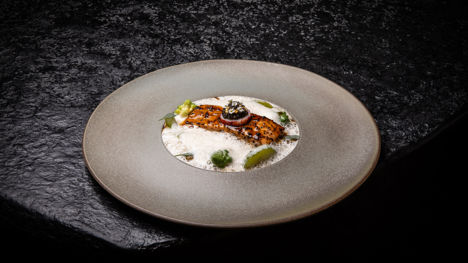
Turbot ‘Jubilee’ with lobster, truffle and Champagne sauce
- 12
- 4 hours 30 minutes plus 24 hours infusing time and chilling time
This dish, which is a take on the classic Roux family recipe inspired by Auguste Escoffier, is close to Adam’s heart because he cooked it in his winning 2012 Roux Scholarship final. He serves the dish at restaurant Woven by Adam Smith, where it is extremely popular. The dish features poached lobster tail, poached turbot fillets with a lobster and truffle mousse, and a selection of vegetable garnishes; salted grapes, pickled cucumber and romanesco cauliflower. The lobster and truffle and Champagne sauces are based on the classic sauces lobster à l'Américaine sauce and sauce Champenoise.

Note: To ‘monté’, means to ‘build up’ or ‘climb up’. In a culinary sense, the French ‘monter au beurre’ refers to whisking cubes of cold butter into a sauce off the heat until emulsified, creating a glossy, richer finish – a technique closely related to the emulsified butter sauce beurre monté.
Ingredients
Metric
Imperial
- 1 turbot, (a minimum weight of 3kg but Adam favours 4-5kg)
BONITO CAULIFLOWER PURÉE
- 8g of bonito flakes
- 500ml of whole milk
- 125g of unsalted butter
- 700g of cauliflower, finely chopped
- 10g of salt
POACHED LOBSTER
- 1 live lobster, (approx. 500g)
- 3g of meat glue
- 50g of Oscietra caviar
- 1/2 sheet of gold leaf
- 1 alyssum flower
LOBSTER AND TRUFFLE MOUSSE
SALTED GRAPES
PICKLED CUCUMBER
- 1 cucumber, peeled, deseeded and cut into 5mm discs, skin and seeds reserved
- 30g of dill
- 300g of apple juice
- 30ml of white balsamic vinegar
- 10g of chardonnay vinegar
- 6g of salt
CHAMPAGNE SAUCE
- 200g of scallop skirt
- 75g of unsalted butter
- 2 lobster heads
- 5 white peppercorns
- 1 star anise
- 5g of thyme
- 10g of tarragon
- 100g of banana shallots, finely sliced
- 100g of fennel, finely sliced
- 1 garlic bulb, halved
- 250g of button mushrooms, sliced
- 750g of clams
- 750g of mussels
- 75ml of Armagnac
- 500ml of white wine
- 1.5l fish stock
- 1l double cream
- 250ml of whole milk
- 2 lemons, juiced
- 200ml of Champagne, or English sparkling wine, to taste
- vegetable oil, for cooking
LOBSTER AND TRUFFLE SAUCE
- 1kg lobster heads, chopped
- 2 garlic bulbs, halved
- 20g of thyme
- 200g of banana shallots
- 50g of tomato purée
- 200ml of white wine
- 400ml of Madeira
- 1l white chicken stock
- 1l brown chicken stock
- 500g of button mushrooms, sliced
- 100g of preserved truffle
- 200ml of truffle juice
- 250g of unsalted butter, cubed and chilled, to monté (see note), plus extra for cooking
- lemon juice, to taste
- vegetable oil, for cooking
GARNISHES
- 1 romanesco cauliflower, small florets neatly removed
- unsalted butter, for glazing
- 100g of sea purslane
Equipment
- Vacuum bag and machine
- Water bath
- Temperature probe
- Piping bag and nozzle
- Dehydrator
- Squeezy bottle
- Steam oven
- Steamer tray
- Stick blender
Method
Start the bonito cauliflower purée the day before you want to serve the dish. Place the bonito flakes into a heatproof container whilst you bring the milk to the boil in a small pan. Pour over the bonito and infuse for 24 hours
- 8g of bonito flakes
- 500ml of whole milk
Infuse the kombu brine at least 24 hours before you want to serve the dish. Bring the salt and water to the boil in a large pan to dissolve the salt. Add the kombu, remove from the heat and allow to cool. Place the brine in a vacuum bag, vacuum seal and leave in the fridge for 24 hours to infuse. Alternatively, if you don’t have a vacuum packing machine, you can simply place the brine in a container, weighing down the kombu with a piece of baking paper (a cartouche) and a weight to make sure the kombu is submerged
The next day, for the bonito cauliflower purée, place a large saucepan on a medium heat with the butter. Sweat the cauliflower until starting to soften, then cover with the bonito infusion and simmer until the cauliflower is tender and cooked through. Transfer to a blender, working in batches if needed, and blend until smooth. Strain through a fine mesh sieve into a container, transfer into a squeezy bottle and store in the fridge until needed
- 125g of unsalted butter
- 700g of cauliflower, finely chopped
For the poached lobster, first dispatch the lobster by running your knife through the cross on the back of its head. Remove the claws and tail. Set aside the claws for the lobster and truffle mousse
- 1 live lobster, (approx. 500g)
Bring a large pan of highly-seasoned salted water to the boil and set up a bowl of iced water – the water should taste like sea water. Preheat a water bath to 63°C
Blanch the lobster tail for 10 seconds in the water then refresh in the iced water
Remove the shell from the lobster tail and roll tightly it in cling film to ensure it is perfectly round and straight, using the meat glue to seal, if needed. Steam the rolled tail in the water bath until its core temperature reaches 58°C – this should take around 30-45 minutes – then refresh in iced water. Once cool, remove the cling film and reroll in fresh cling film. Store in the fridge until needed
- 3g of meat glue
For the lobster and truffle mousse, remove 200g of the raw lobster meat from the reserved claws and chop into 2cm pieces
Place the bowl of a food processor into the fridge to chill (Adam used a Robot Coupe)
Once the food processor bowl is cold, set up a station of 2 bowls and fill 1 of them with ice. Place the chopped lobster, egg whites and salt into the bowl of the food processor. Blend until smooth then, a little at a time, push through a drum sieve into the empty bowl. Beat the lobster purée with a spatula until shiny, slowly adding the cream and ensuring to consistently beat so the cream emulsifies. Season to taste, then add in the chopped truffle and transfer into a piping bag. Store in the fridge until needed
Remove the kombu from the brine and submerge the fillets completely in the brine. Set aside in the fridge for 30 minutes
Remove and dry the fish fillets, then pipe a 5mm-thick layer of the lobster and truffle mousse on the skin side of the fillet, smoothing the top with an offset spatula. Set aside in the fridge until needed
For the salted grapes, preheat a dehydrator to 65°C. In a bowl, dress the grapes with sea salt and verjus and transfer onto a tray in a single layer. Dehydrate by 25% of their weight – it will take a couple of hours. Set aside in the fridge until needed
For the pickled cucumber, first make a pickling liquor by placing the reserved cucumber skin and seeds, dill, apple juice, white balsamic and chardonnay vinegars in a blender with the salt and blending until smooth. Strain through a sieve and chill in the fridge
- 1 cucumber, peeled, deseeded and cut into 5mm discs, skin and seeds reserved
- 30g of dill
- 300g of apple juice
- 30ml of white balsamic vinegar
- 10g of chardonnay vinegar
- 6g of salt
Once chilled, place the liquor in a vacuum bag with the cucumber discs, vacuum seal and leave in the fridge until needed
For the Champagne sauce, preheat a heavy-based saucepan over a high heat with a splash of vegetable oil. Once very hot, add the scallop skirts and cook until the water has come out of them and reduced away, keeping them moving to avoid colouring
- vegetable oil, for cooking
- 200g of scallop skirt
Add the butter followed by the lobster heads and cook until they turn red, but not fully roasted. Add in the spices, herbs, shallots, fennel and garlic and cook until soft
- 75g of unsalted butter
- 2 lobster heads
- 5 white peppercorns
- 1 star anise
- 5g of thyme
- 10g of tarragon
- 100g of banana shallots, finely sliced
- 100g of fennel, finely sliced
- 1 garlic bulb, halved
Add the fish stock and half of the mushrooms and reduce by a third
- 1.5l fish stock
- 125g of button mushrooms, sliced
Add in the cream, milk, remaining clams, mussels and mushrooms and simmer until the shellfish have opened and are cooked through
- 1l double cream
- 250ml of whole milk
- 375g of clams
- 375g of mussels
- 125g of button mushrooms, sliced
Strain the sauce through a fine mesh sieve, reducing if necessary to the consistency of single cream. Season to taste with salt, lemon juice and English sparkling wine
- 2 lemons, juiced
- 200ml of Champagne, or English sparkling wine, to taste
For the lobster and truffle sauce, place a heavy-based saucepan on a high heat with a splash of vegetable oil. Add the lobster heads and cook until caramelised
- vegetable oil, for cooking
- 1kg lobster heads, chopped
Add in the garlic bulb halves, cut-side down and cook until golden. Add in the thyme followed by the shallot and cook until the shallots until golden
- 2 garlic bulbs, halved
- 20g of thyme
- 200g of banana shallots
Add the tomato purée and cook for 4 minutes to cook out the raw flavour, then deglaze with the white wine and reduce until the pan is dry. Add in the Madeira and reduce by two thirds
- 50g of tomato purée
- 200ml of white wine
- 400ml of Madeira
Add in the white and brown chicken stocks and a third of the button mushrooms. Simmer for 20 minutes
- 1l white chicken stock
- 1l brown chicken stock
- 165g of button mushrooms, sliced
Add in another third of the button mushrooms and simmer for another 20 minutes, then remove from the heat and add the remaining mushrooms. Turn off the heat and infuse for 15 minutes then strain through a fine mesh sieve and set aside
- 335g of button mushrooms, sliced
Melt some butter in a clean pan and add the preserved truffle. Sweat until softening, without taking on any colour or allowing the truffle to pop. Add the truffle juice and reduce it by half, then add the sauce base and monté (see note) with the cold butter. Season with lemon juice and keep warm
- 250g of unsalted butter, cubed and chilled, to monté (see note), plus extra for cooking
- 100g of preserved truffle
- 200ml of truffle juice
- lemon juice, to taste
For the romanesco cauliflower, set up a bowl of iced water whilst you bring a pan of salted water to the boil. Blanch the florets and refresh in the iced water. Once cool, drain, dry and store in an airtight container until needed
- 1 romanesco cauliflower, small florets neatly removed
To serve, preheat a water bath for warming and a steamer oven to 58°C. Line a steamer tray with baking paper. Transfer the turbot fillets onto the tray and cook for 8-12 minutes until just cooked through
Bring a pan of salted water to the boil. Refresh the romanesco cauliflower florets, then remove with a slotted spoon and glaze in a small pan with a little butter, reserving the water. Set aside on a tray lined with kitchen paper
- unsalted butter, for glazing
Gently reheat the bonito cauliflower purée in its squeezy bottle in the water bath, and reheat the poached lobster in the romanesco cauliflower pan. Gently reheat both sauces
Drain the pickled cucumber slices and cut them in half
Remove the cling film from the poached lobster, slice and garnish with the caviar, gold leaf and alyssum flowers
- 50g of Oscietra caviar
- 1/2 sheet of gold leaf
- 1 alyssum flower
Aerate the Champagne sauce with a handheld blender
To plate, pipe the bonito cauliflower purée into the centre of the plate. Arrange the romanesco cauliflower florets, pickled cucumbers and salted grapes around the outside and garnish the grapes with sea purslane. Top the purée with the turbot. Spoon the lobster and truffle sauce over the mousse so it coats the fillet generously, leaving the outside of the plate free from sauce. Place the poached lobster slices on top of the turbot
- 100g of sea purslane
Spoon the aerated Champagne sauce around the fish over the vegetables. Serve immediately
During his time working under John Williams at The Ritz for almost ten years, Adam Smith fell in love with the complexities of classical cookery. Now a Roux Scholar and executive chef at the Michelin-starred Woven by Adam Smith, at stunning hotel Coworth Park, he puts his own spin on classic combinations that showcase the pinnacle of flavour, technique and plating.
Get in touch
Please sign in or register to send a comment to Great British Chefs.