
Fazzoletti with duck ragù and duck fat pangrattato
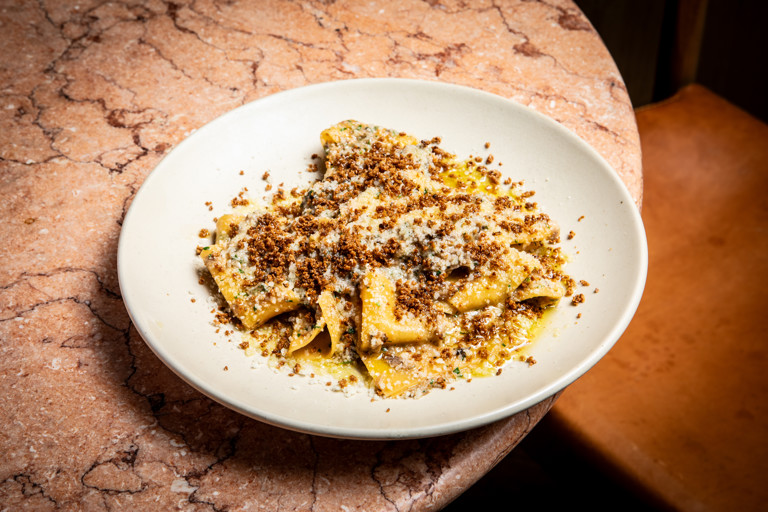
Fazzoletti (‘handkerchiefs’) pasta pairs perfectly with a silky sauce like duck ragù. Chris Leach from Manteca uses a meat grinder to mince the soffrito which gives it an almost melt-in-the-mouth texture, which he cooks for an hour to make a sweet base for his duck sauce. Served with Manteca’s focaccia breadcrumbs fried in duck fat, this dish has silky pasta, crunchy crumbs and a rich depth of duck-filled flavour.
Ingredients
Metric
Imperial
Ragù
- 1/2 carrot, peeled
- 1/2 onion
- 1 celery stick
- 1 garlic clove
- 4 duck legs
- 100g of unsalted butter
- 1 tbsp of tomato purée
- 375ml of red wine, ideally medium-bodied
- 200ml of chicken stock
Fazzoletti
Pangrattato
- 1/4 bunch of thyme, leaves picked
- 1 garlic clove, crushed
- 180g of duck fat
- 250g of focaccia, ideally stale, blitzed into breadcrumbs
- 4g of salt
To serve
- 50g of unsalted butter
- sherry vinegar, to taste
- 20g of flat-leaf parsley, finely chopped
- finely grated Parmesan
- extra virgin olive oil, (Chris uses Two Fields olive oil)
Equipment
- Pasta machine
Method
To start the ragù, use a mincer to mince the carrot, onion, celery and garlic into a soffritto (you could also finely chop it). Set aside
- 1/2 carrot, peeled
- 1/2 onion
- 1 celery stick
- 1 garlic clove
Season the duck legs with salt. In a large pan, melt the butter over a medium-high heat until foaming then place in the legs skin-side down. Turn the heat down a little and leave until the skin achieves a deep golden-brown colour. Turn them over and continue to brown on the flesh side, reducing the heat if the butter starts to burn. Once browned, remove the duck legs and set aside
- 4 duck legs
- 100g of unsalted butter
Turn the heat down to very low, add the soffritto and a small pinch of salt. Cook for about 1 hour until very soft
Add the tomato purée and cook for 2 minutes, then turn up the heat and add the red wine. Reduce it by half
- 1 tbsp of tomato purée
- 375ml of red wine, ideally medium-bodied
Return the duck legs back into the pan. Turn the heat down to low, cover with the chicken stock and cook for 1 hour
- 200ml of chicken stock
After 1 hour, check to see if the meat is falling off the bone – if not, continue to cook until it does then turn off the heat and let the legs cool slightly in the sauce
Once cool enough to handle, pick the meat from the bones, finely chop the skin and mix it all back through the sauce. Check the seasoning and add salt until it tastes good to you. This will make more than you need but any leftovers freeze very well
To make the fazzoletti, first make the pasta dough. Tip the flour onto a large, clean surface and create a mound with a large well in the middle. Pour in the whole eggs and egg yolks, then mix with a fork, bringing in the flour gradually to combine. Once the dough becomes too thick to mix with the fork, use your hands to bring the dough together. Knead it for 10 minutes until smooth and elastic. Wrap well and rest for at least 1 hour in the fridge
Once rested, remove the dough from the fridge and leave at room temperature for 20-30 minutes
Use a pasta machine to roll the dough down to the thinnest setting (1.5mm thick). Cut the sheets into 8cm squares. Dust well with semolina and set aside on a large tray
- fine semolina, for dusting
For the duck fat pangratatto, place the thyme leaves and garlic in a spice grinder and blend until fine (you could also use a pestle and mortar)
- 1/4 bunch of thyme, leaves picked
- 1 garlic clove, crushed
Place the duck fat in a heavy-based pot over a medium heat. Once the fat is hot add all of the ingredients and toast until golden brown, stirring continuously, then strain through a sieve, reserving the fat in a bowl – you can reuse the fat for roasting or sautéing. Allow the pangrattato to cool and adjust the seasoning to taste. Set aside – you’ll not need all the breadcrumbs for this dish but any leftovers will freeze well
When you’re ready to serve, bring a large pot of salted water to the boil
Heat 300g of the duck ragù with the butter and a splash of sherry vinegar. Check the seasoning and adjust to make sure it tastes good to you. Add the parsley and keep the ragù warm
- 50g of unsalted butter
- sherry vinegar, to taste
- 20g of flat-leaf parsley, finely chopped
Cook the fazzoletti in the pan of boiling salted water for around 90 seconds, checking regularly, then add the pasta to the ragù with a generous splash of pasta water. Toss it all together
To serve, divide the pasta and ragù between four plates. Sprinkle over the Parmesan and duck fat pangrattato. Give each dish a drizzle of olive oil and serve
- finely grated Parmesan
- extra virgin olive oil, (Chris uses Two Fields olive oil)
Get in touch
Please sign in or register to send a comment to Great British Chefs.