
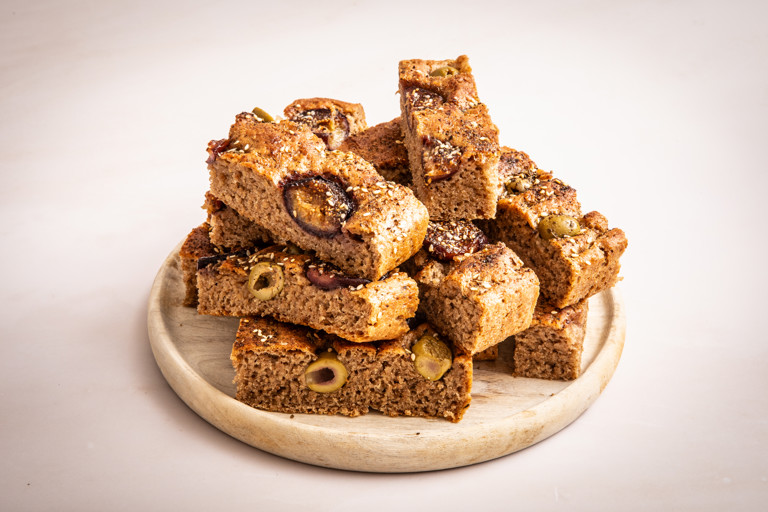
Za’atar rye focaccia with olives and figs
- Makes 1 loaf
- 1 hour 10 minutes plus 30 minutes of autolysing time and 4 hours of proving time
This earthy rye-bread-focaccia hybrid is topped with balsamic and honey-macerated figs, olives and za’atar, taking this bread down to the southern Mediterranean and the Levant. Doves Farm Organic Wholemeal Rye Flour adds nutty and earthy notes that balances beautifully to create a rounded loaf; perfect for sharing as part of a spread or at the start of a meal.
If you can’t get hold of fresh yeast, you can use 7g fast-action dried yeast as a substitute – keep back 25ml of the water in step 1, then 5 minutes before the dough has finished resting (autolysing) in step 1, bloom the yeast in the water, then proceed as step 2 – it will take a little more mixing to incorporate the water and yeast into the dough because of the additional liquid.
Ingredients
Metric
Imperial
- 400g of Doves Farm Organic Wholemeal Rye Flour
- 135g of Doves Farm Organic Strong White Bread Flour
- 135g of Doves Farm Organic Pasta & Pizza Flour
- 450ml of water, 20°C in temperature (or cool but not cold, if you don't have a temperature probe)
- 20g of fresh yeast
- 65g of olive oil, plus extra to serve
- 17g of salt, plus extra for sprinkling
- 10g of za'atar
- 150g of figs, quartered or sliced into sixths
- 15g of honey
- 8g of balsamic vinegar
- 75g of green olives, pitted and drained
Equipment
- Temperature probe
- dough scraper
- 32 x 22cm baking tray
Method
Place the three types of flour in the bowl of a stand mixer and whisk to combine. Using the dough hook attachment, mix in the water on a low speed for a few minutes until the mixture is nearly smooth. Cover with a tea towel and rest for 30 minutes (resting the mixed dough without the yeast or salt helps to hydrate the flours and to encourage gluten development – this stage is called autolyse)
- 400g of Doves Farm Organic Wholemeal Rye Flour
- 135g of Doves Farm Organic Strong White Bread Flour
- 135g of Doves Farm Organic Pasta & Pizza Flour
- 450ml of water, 20°C in temperature (or cool but not cold, if you don't have a temperature probe)
Add the yeast and olive oil, and mix on a medium-high speed for 5-8 minutes until the dough comes away from the sides of the bowl and is smooth, adding 15g of the salt in the final minute. Transfer the dough to a large container with a lid, or to a lightly-greased bowl and cover. Leave to rise for 1 hour
- 20g of fresh yeast
- 65g of olive oil
- 15g of salt
To macerate the figs, place the figs in a bowl or container with the honey, balsamic vinegar and remaining 2g of salt. Gently mix to combine, then leave to macerate for 2 hours, stirring occasionally (place in the fridge if it’s particularly warm)
Using wet hands, carefully lift the dough up from the middle so the top end of the dough folds underneath itself. Repeat until the dough is completely coiled underneath itself and has tightened – this is called a ‘coil fold’. Cover the dough and leave for 1 hour
Repeat the coil fold, cover and leave for a final hour, or until the dough has increased in size and looks aerated (this will depend on the heat of your kitchen)
Line a 32cm x 22cm baking tray with baking paper and grease with a generous splash of olive oil. Set aside
Using a dough scraper, tip the dough onto a clean surface, shape into an oval and tuck in the edges to create surface tension, then transfer to the tray, cover and allow to prove for 30-45 minutes, until aerated
Lightly oil your hands and dimple the dough by pressing gently into it. Drain and distribute the figs and olives into the holes, pressing them down into the dough. Leave to prove for another 30-40 minutes – you know the dough is ready when you press it with the tip of your finger, and it bounces back slowly. If it bounces back quickly, it’s underproved, and if it’s overproved it won’t spring back at all
- 75g of green olives, pitted and drained
Meanwhile, preheat the oven to 240°C
Scatter the top of the dough with flaky sea salt and za’atar. Bake for 5 minutes, then reduce the oven temperature to 200°C and bake for a further 20-25 minutes, or until the focaccia is cooked through (it will be springy to the touch and golden – you can carefully lift the bread up and look at the underside – if it looks grey or undercooked return it to the oven for a further 5-10 minutes). Remove from the oven and cool for 5 minutes before transferring to a wire rack to cool completely
- salt, extra for sprinkling
- 10g of za'atar
Drizzle olive oil over the top of the focaccia then slice and serve with extra olive oil for dipping
- olive oil, extra to serve
Brought to you by Doves Farm
Brought to you by Doves Farm
GBC Kitchen is where you'll find accessible, inspiring recipes with a twist, from our in-house team of recipe developers. Perfect for mid-week meals or special occasions alike, GBC Kitchen recipes will help you become a more confident cook, and impress those around you in the meantime!
Get in touch
Please sign in or register to send a comment to Great British Chefs.