
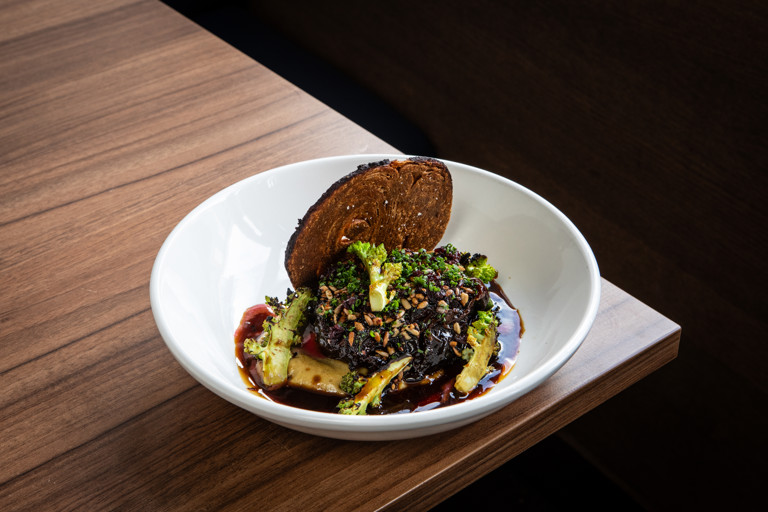
Smoked beef cheek with oyster sauce bordelaise, cauliflower and beef fat palmier
- 4
- 3 hours plus time for setting up the smoker, 2 hours for smoking, 12 hours for braising, and 1 hour for chilling
An absolute triumph from start to finish, this involved yet rewarding beef cheek recipe is all about building layers and layers of intense flavour through reduction and long, slow cooking. The cheeks sit in a knockout sauce, enriched with bone marrow and given depth with oyster sauce. Cauliflower – both puréed and grilled – offer their nutty sweetness, while a proud palmier sits proudly on top.
Ingredients
Metric
Imperial
Beef cheeks
- 4 beef cheeks, trimmed
- 8g of MSG (monosodium glutamate) powder
- 15g of fine salt
- 10g of mushroom powder
- finely chopped chives, to garnish
Bordelaise
- 2 bone marrow half-bones
- 3 shallots, chopped
- 2 carrots, chopped
- 1 celery stick, chopped
- 4 garlic cloves, peeled
- 2l beef stock
- 375ml of red wine
- 650ml of oyster sauce
- 10g of thyme, tied with butcher’s string
- 1 knob of unsalted butter
Cauliflower Purée
- 350g of unsalted butter
- 1kg cauliflower, finely chopped
- 14g of fine salt
- 5g of porcini powder
- 450g of double cream
Shallots
- 2 shallots, finely chopped
- 150ml of rice wine vinegar
- 10ml of light soy sauce
- 65g of dark brown sugar
- 100ml of red wine
- 1 sprig of thyme
Florets
- 1 romanesco cauliflower, broken down into 20 small florets
- 10g of unsalted butter
- 45g of oyster sauce
- 55g of honey
- 20g of light soy sauce
Palmier
- 1 30x30cm sheet puff pastry
- 10g of caster sugar
Beef fat seeds
- 75g of sunflower seeds
- 20g of black sesame seeds
- 15g of white sesame seeds
- 2g of freshly ground black pepper
- rendered beef fat, rendered, for frying and brushing
Equipment
- Smoker
Method
Set up a smoker or light a very gentle fire and add a few small logs which have been soaked in water. Season the beef cheeks with the MSG, salt and mushroom powder
- 4 beef cheeks, trimmed
- 8g of MSG (monosodium glutamate) powder
- 15g of fine salt
- 10g of mushroom powder
Gently cold-smoke the cheeks for 2 hours
Meanwhile, preheat the oven to 180°C. Put the bone marrow bones cut-side up in a roasting tin and roast for 10 minutes. Scrape out the softened marrow and any fat into a large saucepan, reserving the bones
Put the saucepan over a medium heat and add the shallots, carrot, celery and garlic. Cook, stirring often, until very well caramelised in the marrow
- 3 shallots, chopped
- 2 carrots, chopped
- 1 celery stick, chopped
- 4 garlic cloves, peeled
Once the cheeks have finished smoking, add them to the pan with the stock, wine, oyster sauce and thyme. Stir well, then add the bone marrow bones back in too. Cover the pan with foil and leave to gently braise for 12 hours. Try to aim to keep the liquid at 95°C
Allow the cheeks to cool, then remove them from the sauce and keep in the fridge to reheat later. Put the sauce back over the heat and reduce by half, then reserve this too
To make the cauliflower puree, put a wide saucepan over a medium heat and add the butter. Cook it until it turns into beurre noisette, then add the cauliflower and salt. Turn the heat down and cook, stirring regularly, until the cauliflower is completely golden
- 350g of unsalted butter
- 1kg cauliflower, finely chopped
- 14g of fine salt
Add the porcini powder and cream, then bring back to a boil and simmer for 2 minutes, whisking constantly. Transfer to a blender, blitz until smooth, then pass through a fine sieve and taste for seasoning. Keep covered in the fridge until needed
- 5g of porcini powder
- 450g of double cream
To make the shallots, add all the ingredients to a saucepan and reduce over a medium heat until the pan is nearly dry and the liquid turns syrupy. Keep an eye on it as once it has nearly reduced it can burn easily. Set aside for later
- 2 shallots, finely chopped
- 150ml of rice wine vinegar
- 10ml of light soy sauce
- 65g of dark brown sugar
- 100ml of red wine
- 1 sprig of thyme
For the florets, blanch the romanesco in heavily salted boiling water for 20 seconds, then drain and refresh in iced water. Put the remaining ingredients in a saucepan and gently simmer for 5 minutes to slightly reduce and create a glaze. Set both aside for later
- 1 romanesco cauliflower, broken down into 20 small florets
- 10g of unsalted butter
- 45g of oyster sauce
- 55g of honey
- 20g of light soy sauce
For the palmier, roll one side of the sheet of pastry into a spiral until you get halfway across, then roll up the other side until it meets the other spiral in the middle. Put in the fridge to chill for 1 hour
Preheat the oven to 200°C. Slice the pastry sheet into 4 even pieces. Transfer to a large lined baking tray, brush liberally with some of the beef fat from the seeds and sprinkle with caster sugar
- 10g of caster sugar
- rendered beef fat, rendered, for frying and brushing
Put another sheet of baking paper on top of the palmiers, followed by another baking sheet, then push down hard. Bake for 15 minutes, remove the top baking sheet and paper, then return to the oven for another 2-3 minutes until fully caramelised. Set aside on kitchen paper to drain and sprinkle with salt
Heat some more beef fat in a saucepan to deep-fry the seeds. When it reaches 160°C, carefully lower all the seeds and cracked pepper into the oil. Cook until lightly golden – don’t be tempted to take them any further as they will continue to cook after you remove them. Drain the seeds in a fine sieve, then season with salt
- 75g of sunflower seeds
- 20g of black sesame seeds
- 15g of white sesame seeds
- 2g of freshly ground black pepper
- rendered beef fat, rendered, for frying and brushing
You have now cooked all the elements needed for this dish – you just need to reheat them before serving. For the beef cheeks, sear them over a hot grill, turning often and glazing with the reduced sauce
Transfer them to a small sauté pan with a few more ladles of the sauce and a knob of butter. Leave to gently braise over a medium heat until nicely glazed
- 1 knob of unsalted butter
While the cheeks reheat, put the reserved romanesco florets on a hot grill, turning them every 30 seconds or so and brushing them with the glaze until they are charred and hot throughout
Gently reheat the cauliflower purée – you may need to add a splash of cold water if it starts to split. Reheat the palmiers by putting them in a hot oven for 1 minute
To serve, add a generous spoonful of cauliflower purée to the base of each serving dish. Top with a beef cheek, spooning in some of the reduced sauce too. Cover the cheek with some of the sticky shallots and beef fat seeds, then arrange some charred romanesco florets all around. Sprinkle generously with chives, then stand a palmier upright in each one
- finely chopped chives, to garnish
With years of experience working in a number of the UK’s top fine dining restaurants behind him, Drew Snaith’s focus now lies in cooking flavour-led food which doesn’t take itself too seriously. At his Hackney restaurant SESTA, his ever-changing playful menu showcases both immense skill and an ability to balance quality cookery with fun.
Get in touch
Please sign in or register to send a comment to Great British Chefs.