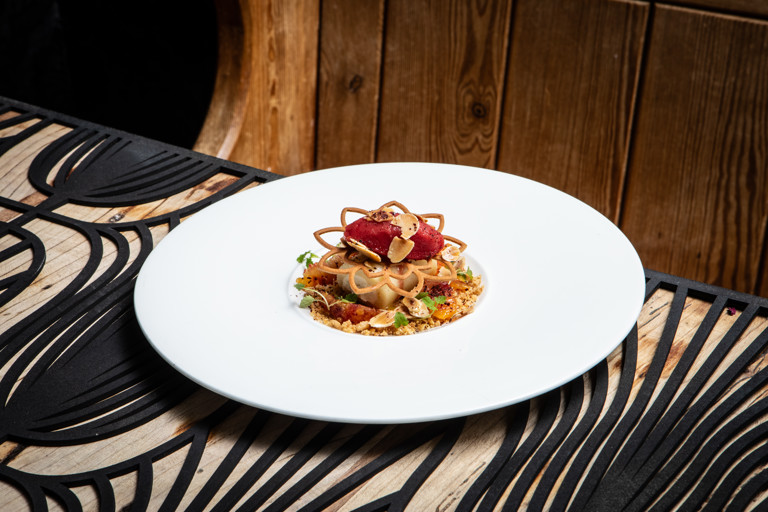
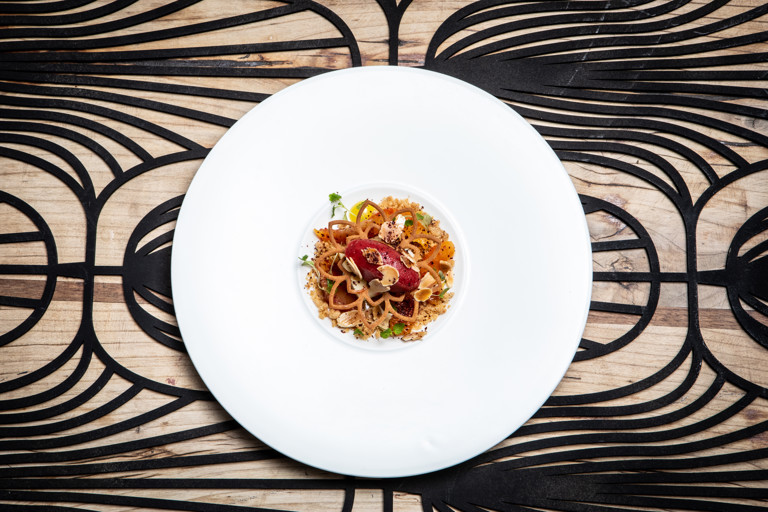
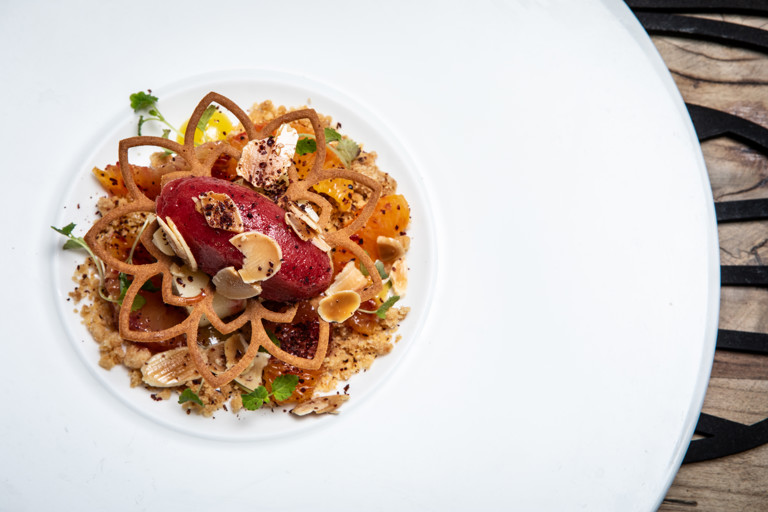
Labneh halawet el jibn, blood orange, almond and olive oil
- medium
- 6
- 2 hours 40 minutes plus 6 hours chilling and freezing
Halawet el jibn is a Syrian dessert made of a sweetened semolina and cheese dough rolled and filled with ‘ashta’ – a clotted cream filling. Ayesha Kalaji uses a labneh mousse in place of the ashta at her restaurant Queen of Cups and serves this with an intense blood orange sorbet, a blood orange ‘attar’ sugar syrup and a blood orange infused olive oil gel. A honey tuile and almond and sumac crumble add pleasing textural elements. The dish is finished with freshly segmented blood orange and micro lemon balm, meaning this dessert hits all the markers for an excellent end to a meal – chewy, soft, creamy, cold, crunchy, crispy and fresh.
Ayesha says: “I put this recipe on the menu at Queen of Cups because it is my dad’s favourite dessert. I have changed the filling from the traditional ashta to a labneh mousse as I find it lighter and I prefer the lactic tang it gives.”
Ingredients
Metric
Imperial
BLOOD ORANGE SORBET
- 1 blood orange, zested
- 1 tsp sumac
- 25g of caster sugar
- 1g of sorbet stabiliser
- 20g of liquid glucose
- 120g of water
- 185g of blood orange juice, (about 3 oranges) strained, plus more as needed, peel reserved
OLIVE OIL GEL
- 70g of extra virgin olive oil
- 1 sprig of thyme
- 1/2 gelatine leaf, gold grade
- 25g of water
- 30g of isomalt sugar
- 22g of caster sugar
- 8g of glucose syrup
BLOOD ORANGE ATTAR
- 130g of caster sugar
- 65ml of water
- 1 sprig of thyme, small
LABNEH MOUSSE
- 250g of double cream
- 20g of icing sugar, or more or less depending on taste
- 1/4 tsp orange blossom water
- 250g of labneh
HALAWET EL JIBN DOUGH
- 95g of water
- 25g of fine semolina, fine
- 10g of caster sugar
- 80g of low-moisture mozzarella, finely grated
HONEY TUILE
- 40g of plain flour
- 40g of egg white
- 30g of icing sugar
- 8g of honey
- 40g of unsalted butter, melted
ALMOND & SUMAC CRUMBLE
- 50g of caster sugar
- 50g of unsalted butter, softened
- 50g of plain flour
- 50g of ground almonds
- 1/2 tsp sumac
TO SERVE
- 1 blood orange, segmented
- flaked almonds, toasted
- lemon balm cress
- sumac
Equipment
- Temperature probe
- Ice cream maker
- Flower tuile mould
Method
- 1 blood orange, zested
- 1 tsp sumac
- 25g of caster sugar
- 1g of stabiliser
Add the mixture to a small pan with the liquid glucose and water. Heat until the sugar is dissolved and the temperature reaches 85°C
- 20g of liquid glucose
- 120g of water
- 185g of blood orange juice, (about 3 oranges) strained, plus more as needed, peel reserved
For the olive oil gel, first infuse some extra virgin olive oil. Place some of the leftover peel from the blood oranges in a pan (saving ½ an orange’s worth for the attar) with the extra virgin olive oil and a sprig of thyme. Bring the temperature up to 60°C (or simply warm through). Allow to cool and infuse, then strain through a sieve, discarding the solids. Weigh out 55g and set aside
- 70g of extra virgin olive oil
- 1 sprig of thyme
- 1/2 gelatine leaf, gold grade
- 25g of water
- 30g of isomalt sugar
- 22g of caster sugar
- 8g of glucose syrup
Use a handheld blender to slowly emulsify in the infused olive oil. Season lightly with salt, cool completely, then transfer to the fridge until fully set
- 130g of caster sugar
- 65ml of water
- 1 sprig of thyme, small
- 250g of double cream
- 20g of icing sugar, or more or less depending on taste
- 1/4 tsp orange blossom water
- 250g of labneh
- 95g of water
- 25g of fine semolina
- 10g of caster sugar
- 80g of low-moisture mozzarella, finely grated
- 40g of plain flour
- 40g of egg white
- 30g of icing sugar
- 8g of honey
- 40g of unsalted butter, melted
- 50g of caster sugar
- 50g of unsalted butter, softened
- 50g of plain flour
- 50g of ground almonds
- 1/2 tsp sumac
- 1 blood orange, segmented
- flaked almonds, toasted
- lemon balm cress
- sumac
Get in touch
Please sign in or register to send a comment to Great British Chefs.