
Fermented radish kimchi
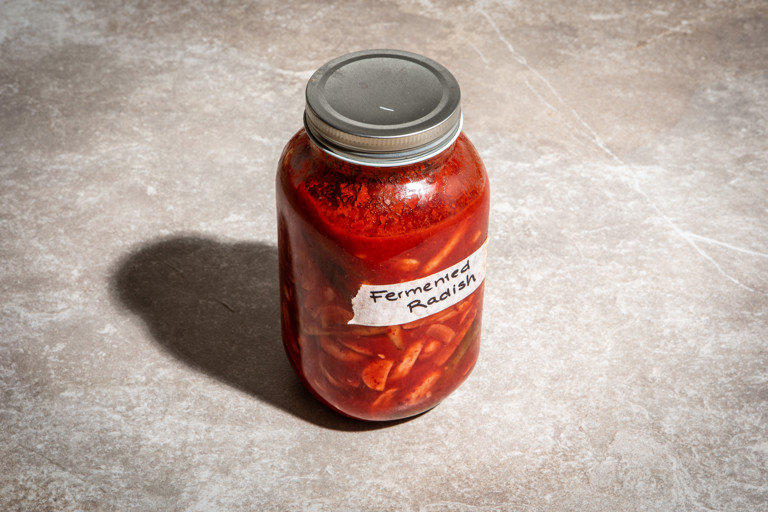
- Ferment
- Makes 1 litre jar
- 45 minutes plus 5 days fermenting and 'burping'
If you've tried making Chinese cabbage kimchi and you're looking for a new type to try, give radish kimchi a go. Breakfast or red globe radishes offer pungent and peppery results, daikon (or mooli) offers a firm texture, whilst watermelon radish offers a gentler, milder peppery flavour. Used in this Crispy rice salad dish, the crunchy radish is a sharp, spicy element and the kimchi liquid is used to make a dressing for the rice cakes. For more chefs' tips, explore our how to ferment vegetables guide, which explains the whys and wherefores of lacto-fermentation and provides inspiration and recipes for kimchi, sauerkraut, fermented chilli sauce and more.
Ingredients
Metric
Imperial
RADISH KIMCHI
- 400g of breakfast radishes, (or radish of your choice) washed well and cut into wedges
- 4 spring onions, washed well and cut into 4cm lengths
- 12g of fine sea salt
- 1 tbsp of caster sugar
KIMCHI PASTE
- 3 garlic cloves, finely grated
- 1 tsp finely grated ginger
- 1 tbsp of gochugaru
- 1 tbsp of fish sauce
- 1 tsp soy sauce
- 1 tsp rice vinegar
- 1 tsp honey
- 2 tbsp of water
Method
Start the process at least 5 days before you want to eat the kimchi. Place the radishes and spring onions in a bowl with the salt and sugar. Toss well and leave for 20-30 minutes to draw out moisture. Rinse lightly and drain
- 400g of breakfast radishes, (or radish of your choice) washed well and cut into wedges
- 4 spring onions, washed well and cut into 4cm lengths
- 12g of fine sea salt
- 1 tbsp of caster sugar
Sterilise a 1 litre jar or container and fermenting weight (if using)
To make the kimchi paste, mix all the ingredients in a bowl to a loose paste
- 3 garlic cloves, finely grated
- 1 tsp finely grated ginger
- 1 tbsp of gochugaru
- 1 tbsp of fish sauce
- 1 tsp soy sauce
- 1 tsp rice vinegar
- 1 tsp honey
- 2 tbsp of water
Massage the paste into the radishes and spring onions until fully coated, then pack tightly into the sterilised jar, pressing down well so the vegetables release liquid and are submerged (you can use a sterilised fermenting weight). Seal loosely
Leave the kimchi to ferment in a cool, dark place at room temperature for 5 days until lightly sour and developing complexity, 'burping' the jar by opening it daily to release the pressure and pressing the radishes down so they continue to be submerged
Once the level of acidity is pleasantly sour, store in the fridge, where it will continue developing in flavour
Get in touch
Please sign in or register to send a comment to Great British Chefs.