Cod fishing off the coast of western Norway
by Tom Shingler14 February 2025

There’s a reason Norwegian cod is known as ‘white gold’ among the residents of Ålesund. This iconic city, nestled amongst the fjords and coastlines of western Norway, simply wouldn’t exist without the local fishing industry. The sheer abundance of cod means it doesn’t just feed the locals; it also gets exported all over the world, finding its way onto all sorts of menus. In particular, it’s the UK’s proper fish and chip shops that make the most of it.
That’s why the Norwegian Seafood Council are heavily involved with The National Fish and Chip Awards, a body that celebrates the shops that consistently produce the best examples of the classic British dish. This year, the ten finalists for the coveted title of Independent Takeaway Fish and Chip Shop of the Year were invited to Ålesund for a few days to see where the cod many of them cook with comes from. I was lucky enough to accompany them.
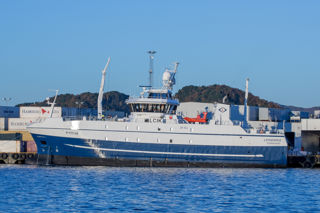
Norway is home to some of the most sustainable fisheries in the world, and tight controls mean stocks have continued to flourish despite increased demand. But this doesn’t mean the ships catching the cod are like the small day boats of Cornwall. The ship we were going on – the MS Leinebris – cost £31 million to build and looked like something between a superyacht and a miniature cruise ship; it had seven floors home to things like viewing platforms, a cinema and a gym. Despite its size, however, there are usually no more than twenty-four crew members on board, who will live on the boat for four weeks as it heads deep into the Norwegian and Barents Sea.
There are other reasons why the Leinebris is so big. Because it’s out at sea for up to a month at a time, the fish needs to be frozen before it reaches the shore. As one of Norway's most advanced vessels the ship is kitted out with all the latest technology, including a fully functional processing plant in the belly of the hull. As soon as fish are brought on board they are transported downstairs to be gutted, cleaned, filleted, packaged up and frozen – a process which takes no more than a few minutes from start to finish. Being able to preserve the cod in this way ensures it is as fresh as can be when it reaches the fish and chip shops of the UK.
The crew on the Leinebris catch cod using the ‘longline’ method, which is much more environmentally friendly than trawling. It involves one (or several) lines with lots of hooks attached being ‘shot’ out of the back of the ship, before everything is reeled back in with (hopefully) lots of fish. On the Leinebris they take this method to the extreme, using a line which can hold up to 50,000 hooks – each of which are automatically baited with a little piece of squid as they are shot out of the ship.
We were only on the ship for a day, so rather than 50,000 hooks the crew sent out a couple of thousand. Once they were all in the water we waited for ninety minutes to see how many cod would bite. The bridge on the Leinebris looked like something out of Star Trek, with all sorts of screens, sonars, keypads and radios, some of which told the skipper where the fish were most likely to be, and while it wasn't a huge catch, there were some nice big fish brought up.
The line gets reeled in quite slowly, either depositing smaller fish into a catchment pool within the ship or dragging larger specimens up to a fisherman, poised and ready with a hook and knife to dispatch them quickly and send them down for processing. It was amazing to see all this technology being used in every part of the ship, but there’s still no replacement for a skilled fisherman armed with a blade amidst all the computers and automation.
Back on dry land, we were treated to some of the delicacies fresh Norwegian cod is turned into in cities like Ålesund. Stockfish (dried and salted cod) has been made in the area since Viking times, but nowadays bacalao – a Mediterranean salted cod stew popular in Portugal and Italy – is favoured. We also ate battered cod tongues which were surprisingly firm and meaty, as well as more adventurous dishes at the Klippfiskakademiet; a centre dedicated to the dried cod and other coastal dishes of Norway.
However, it wasn’t until a week or two later when I was back in the UK that I really appreciated the flavour of Norwegian cod and the time and effort people put in to catching, processing and shipping it across the world. Visiting one of the fish and chip shop finalists for dinner, it was incredible to think the fresh, white, flaky cod inside the crunchy batter had come from the crystal clear waters around Ålesund. All too often we dismiss fish and chip shops as takeaways, putting them in the same category as kebab and chicken shops. But when you go to one that really cares about what it sells and sources its fish from ships like the Leinebris, they’re an inimitable stalwart of what makes British cuisine so great and deserve the same amount of respect as some of our finest traditional restaurants.
Please sign in or register to send a comment to Great British Chefs.