The case for stainless: why better pans make you a better cook
25 November 2026

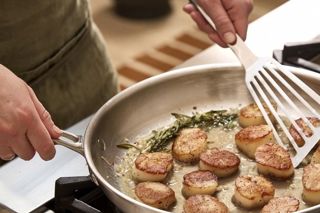
You can improve your culinary skills – and make cooking more fun – in all sorts of ways. A sharp knife, a solid recipe and access to great quality ingredients each offer instant upgrades to what ends up on the plate. But one of the most useful (and often overlooked) improvements you can make to your kitchen is the pans which you are cooking with. And if you’re not already using them, pans made from stainless steel can be revolutionary.
There’s a reason why most chefs choose stainless steel. It lasts forever, is easy to look after, can withstand anything you throw at it and conducts (and, crucially, retains) heat in a way that’ll give you the perfect sear or controlled simmer.
Take a steak, for example. When it hits hot metal, the proteins and natural sugars in the meat undergo a chemical change, generating hundreds of tasty new flavour compounds and turning golden and brown in the process. It’s basically the same as caramelisation, but with proteins (or, to be specific, the amino acids within the protein) thrown into the mix.
This reaction will happen in any hot pan, regardless of what it’s made from. What makes stainless steel so preferable is the efficiency of this reaction when using bare steel, along with something called ‘fond’. This is the French term for all those delicious little brown bits that get stuck to the base of the pan, which then dissolve into sauces when you deglaze it with various liquids. That fond adds heaps of flavour to a pan sauce, and is a big reason why chefs love stainless steel so much.
A big reason why so many home cooks steer clear of stainless and play it safe with non-stick is because ingredients can end up fusing or ‘sticking’ to the base of the pan. But just a little bit of cooking know-how can eliminate this issue almost entirely.
Food sticks to stainless steel when the metal isn’t hot enough. Unlike non-stick pans, you need to heat stainless steel up for a few minutes before adding anything to it. The best way to check the temperature of your pan is by utilising another scientific process – something called the Leidenfrost effect. Add a few drops of water to a preheated pan: if they immediately evaporate, your pan is too cool. If the droplets break apart into lots of tiny little beads and dance around aggressively, your pan is probably too hot. If the droplets gather into several small beads and seem to glide across the surface, however, you're good to go.
Temperature control is one thing; how often (and when) you interact with the food in the pan plays a part too. In most cases, you want to preheat the pan, add your oil or fat and give it a moment to heat through before introducing your ingredients. If you’re looking for that lovely golden sear and a good Maillard reaction, leave your ingredients alone. At first, the proteins will naturally bond with the metal, which is why trying to flip something too early often results in it tearing or leaving half its crust behind.
As the surface browns and a crust develops, that bond begins to weaken. After a couple of minutes, gently lift one edge with a spatula or tongs. If it comes away easily, with little resistance, it's ready to turn. If it's still firmly attached, don't force it; give it another 30 seconds or so and try again. The exact timing will depend on the ingredient, its thickness and the heat of your pan, but the main thing to remember is to not try and ‘force’ a flip. The food will let you know when it’s ready to be turned by naturally releasing itself.
This is one of the most useful things to understand about stainless steel: sticking doesn't always mean something has gone wrong. Often, it simply means the food needs a little longer to develop its crust. Learning when to leave ingredients alone, and when they're ready to move, is a small adjustment that can make a considerable difference to your cooking.
Like any set of pans, there is a whole spectrum of quality – and price – when it comes to buying stainless steel. Many of the best include a core layer of copper or aluminium to ensure even heat distribution and eliminate hotspots, and if you’re looking to invest in a set of pans for life, you want the best you can afford. Hestan is a brand that started in the upper echelons of fine dining kitchens and continues to be the cookware of choice for some of the world’s best chefs. Its stainless steel pans are some of the best we’ve used, and extra features such as the flush rivets on the interior of the pans (which make cleaning a doddle) and the sealed rims, which mean you can cleanly pour from them, are the kinds of things you only truly appreciate when using cookware day in, day out.
There's a place for all sorts of pans in the kitchen, and no single one needs to do everything. But when it comes to everyday versatility, stainless steel is hard to beat. From getting a good sear on a piece of meat to building a sauce in the same pan, it's the thing you'll find yourself reaching for time and again. And once you get to grips with cooking on stainless steel, you'll find there's very little it can't handle.
Please sign in or register to send a comment to Great British Chefs.