How to make scrambled eggs
by Great British Chefs27 November 2026

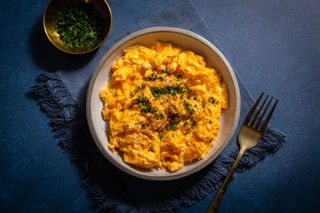
Of all the ways to cook an egg, scrambling them probably is the most divisive. Some chefs swear by the gentle French method, producing something very soft and almost like an eggy porridge. Others prefer a very firm and – dare we say it – rubbery egg, which ensures without a doubt the egg is fully cooked.
While we’re not averse to the very soft, runny scrambled eggs some chefs love, we do tend to like ours a little more robust. We want something solid but without the rubberiness cooking eggs to this level tends to result in. The solution? One secret ingredient which completely transforms how the eggs cook. Read on to find out what it is, along with our ultimate foolproof recipe for incredible scrambled eggs.
As with almost all egg cookery, non-stick is your friend here. Because scrambled eggs don’t require any browning or searing and the last thing you want is your eggs sticking to the base of the pan, non-stick is the perfect material. Cooking eggs is often the sole reason why chefs will keep a single non-stick pan in their kitchen.
This is a bone of contention between many home cooks and chefs. Salt doesn’t just season raw egg; it changes their texture by drawing out water and breaking down cell structures. Some cooks think this is a good thing when it comes to scrambled eggs, as adding salt before beating allows the yolk and white to become more homogenous. Others prefer adding salt at the end because it allows the set egg to form larger curds. It really comes down to personal preference, but we always like adding salt at the end of the cooking process as we think the texture is better.
Cornflour. Mixing it into the eggs before they’re cooked evenly distributes the stuff throughout the mixture before it hits the pan. When cornflour is heated, it swells and absorbs moisture that would otherwise be lost to evaporation, resulting in scrambled eggs which are moist and fluffy. It also prevents protein bonds tightening which prevents rubberiness, and generally makes scrambling eggs more forgiving – in short, it takes longer to overcook them.
Dairy is an egg’s best friend (along with salt!), which is why we always scramble our eggs in butter. But adding a hit of dairy towards the end is a great idea, too. Cream, soured cream, crème fraiche – just a spoonful of any of these helps to enrich the eggs and cools them down, preventing overcooking in those final few moments (eggs continue to cook for a short while even when taken off the heat).
Rather than aggressively beating the eggs or properly ‘scrambling’ them, we like a more gentle approach. Using a silicone spatula, long, dragging movements across the base of the pan ensures big, ribbony curds rather than lots of little pieces. It’s important to keep the mixture moving near constantly so no single piece of egg stays still for too long and overcooks, but this can be done calmly and gently to create the largest, fluffiest pieces possible.
Put a small non-stick frying pan over a low-medium heat
Meanwhile, crack the eggs into a bowl, add the cornflour slurry and beat well with a fork
Pour the cream into a small bowl and season very generously with salt
Add the butter to the pan and, once melted and starting to foam, pour in the eggs
Immediately start using a silicone spatula to drag long lines through the beaten eggs. Go in all different directions, trying to make sure the eggs are constantly moving without breaking up the curds as they form
When you feel like the eggs are about 80-90% cooked – so just before you’d consider them ready – pour in the seasoned cream and gently fold it into the eggs. Remove the pan from the heat and continue to gently fold the eggs until they have fully absorbed the cream
Transfer to your chosen plate or toast, then sprinkle with black pepper and chives
That’s how we like to cook our scrambled eggs – but it’s rare to enjoy them alone! Here are some of our favourite recipes that make those fluffy, curd-like eggs the star.
From burritos to breakfasts, scrambled eggs can take on flavours and provide a fluffy hit of protein to all sorts of dishes. Here are some of our favourites.
Please sign in or register to send a comment to Great British Chefs.