How to fry an egg
by Great British Chefs13 November 2026

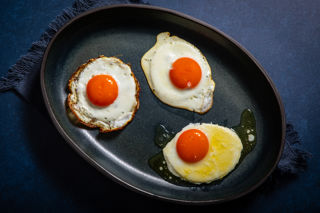
Frying an egg. Easy right? Most recipes would suggest so, often skimming over the details on the assumption that everyone knows how to do it. But even though the ingredients list is short, there are many variables in the world of egg-frying that will change the texture, flavour and, ultimately, success of how well your egg is fried.
What’s the pan you’re using made from? What temperature are you cooking over? Are you using oil or butter to cook it? Should you leave it alone or move it around as it cooks? How you answer each of these questions will help shape your fried egg’s destiny.
That’s why we aren’t sharing a definitive way of frying the perfect egg. Instead, we’re sharing three. Perfection is subjective, and few of us eat fried eggs on their own, so what dish they’re going into should influence how we fry them, too. Below are some general guidelines on egg frying ‘best practice’, along with a trio of foolproof egg frying methods that suit any and all culinary requirements.
At Great British Chefs we usually champion the virtues of stainless steel, cast-iron and carbon steel, as pans made from these materials tend to offer better searing, heat retention and overall tastier results. There is, however, a reason every chef will have a non-stick frying pan in their culinary arsenal. That reason is eggs.
Non-stick pans are basically made for eggs. Sure, you can fry an egg in a well-seasoned carbon steel wok, or impress people on the internet with your ability to stop an egg sticking to the base of a stainless steel pan. But non-stick pans eliminate any risk of the egg getting stuck and give you a consistent finish every single time. So in our opinion, non-stick is always the way to go.
This decision will come down to personal preference and, more commonly, what you’re serving your fried egg with. A neutral oil has the benefit of a high smoke point – so you can cook your egg hard and fast without fear of the fat burning – but also browns and crisps up the egg quicker. Using butter enriches the egg and offers a more tender finish but can burn over too high a heat and dairy doesn’t suit all dishes. We’ve found the best results lie with either vegetable oil or butter (or a mixture of the two); any flavourful oils with a lower smoke point are best used to dress the egg rather than cook it.
We always season our fried eggs at the end of cooking. Salt draws out moisture, and can interfere with the texture of the egg if the grains dissolve into it before the heat sets the white and yolk. Seasoning at the end ensures you can get your egg exactly as you want it, then add salt separately.
All these methods are simple and can easily be scaled up depending on how many eggs you want to cook – but the small differences in each recipe produce very different results.
This is a simple, leave-it-alone cooking method that creates a deeply browned crisp base, a just-set white and a yolk that is fudgy on the bottom and oozy on top. It’s brilliant with rice dishes, especially in Asian cuisines where cooking eggs in butter isn’t right.
Put a non-stick frying pan over a medium-high heat. Add enough oil to just cover the base of the pan
Carefully crack the egg into the centre of the pan. Leave it undisturbed for the entire cooking time. If the base is getting too brown and the white is still not set, turn down the heat
Once the white has set on top of the egg (usually after about 2 minutes), it’s ready. Season with salt and enjoy
A great all-rounder egg which comes into its own if you’re frying a lot of eggs at once or have a few different things on the go and need to turn your attention elsewhere. If you have a fear of un-set egg whites, this method is your best bet.
Put a lidded non-stick frying pan over a medium heat. Add a splash of oil
Carefully crack the egg into the centre of the pan. Leave it alone until the white has set on the bottom (around 10 seconds). Add the knob of butter and then immediately cover the pan
The water in the butter will turn to steam and help set the white. Check after 1 minute; the white should be set and the yolk still runny, with little to no browning on the base of the egg
Season with salt and enjoy
This is a French technique for frying eggs from a legendary chef called Fernand Point. In true stereotypical French fashion, the method requires heaps of butter, which the egg is very gently cooked and basted in. The result is something very rich but incredibly tender in texture, with the ooziest yolk you can imagine. This is a great egg for sandwiches or topping toast.
As soon as the butter has melted (but it should not be foaming), carefully crack an egg into the centre of the pan
Leave the egg undisturbed until the whites have turned opaque. Using a teaspoon, very gently baste the white of the egg with the melted butter to help set the top
Once the whites have set, gently lift the egg out of the pan, season and enjoy
There are, of course, many more ways to fry eggs, but these three are our go-to methods and showcase what a massive impact a tiny difference can make. Now all you need is a dish to serve your perfectly fried egg with – here’s some inspiration!
Just a few of our favourite recipes which make fried eggs the star. Now you know how to fry them to perfection, you can take these dishes to the next level.
Please sign in or register to send a comment to Great British Chefs.