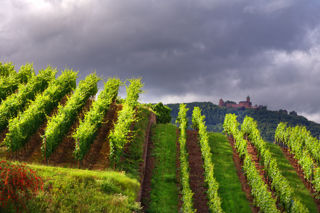
Sylvaner – Another fairly rare grape to see on its own, but not impossible to find if you are a keen explorer of specialist wine shops. Sylvaner is somewhat similar in style to its more famous peer, Riesling, with good fresh acidity and the ability to age and develop a honeyed note. However, the grape is rather demanding and needs a good site and warm vintage to mature fully, so it has fallen a little out of favour as a wine to bottle on its own.
This freshness and a hint of honeyed fruit can make it a very good match for pork, ham and fatty bacon, or a classic onion tart, or more delicately spiced Asian dishes.
Klevener de Heiligenstein - Possibly the rarest of the “other” grapes because this has to be grown only in specific areas of Alsace. This pink skinned cousin to Gewurztraminer, also known as Savagnin Rosé in other regions, is planted around the commune of Heiligenstein in central Alsace.
Klevener de Heiligenstein, is less aromatic than Gewurztraminer, but higher in acidity. It shares similar tastes of lychees and citrus fruit, and white floral aromas, but without the intensity of the more famous and widely planted Gewurztraminer.
Only 5 communes may bottle this wine variety today, but it appears that existing vineyards may not be replanted, so the name may eventually disappear.
Note: This should not be confused with ‘Klevner’ (without the second “e” which is another name for Pinot Blanc), but is a different grape altogether.
Chasselas – A rare sight in Alsace, this grape is not very aromatic, so can appear rather dull at first, but it can add good freshness to “Edelzwicker” blends, and if you do find a bottle labelled with this grape, you will notice its crisp, clean style.